
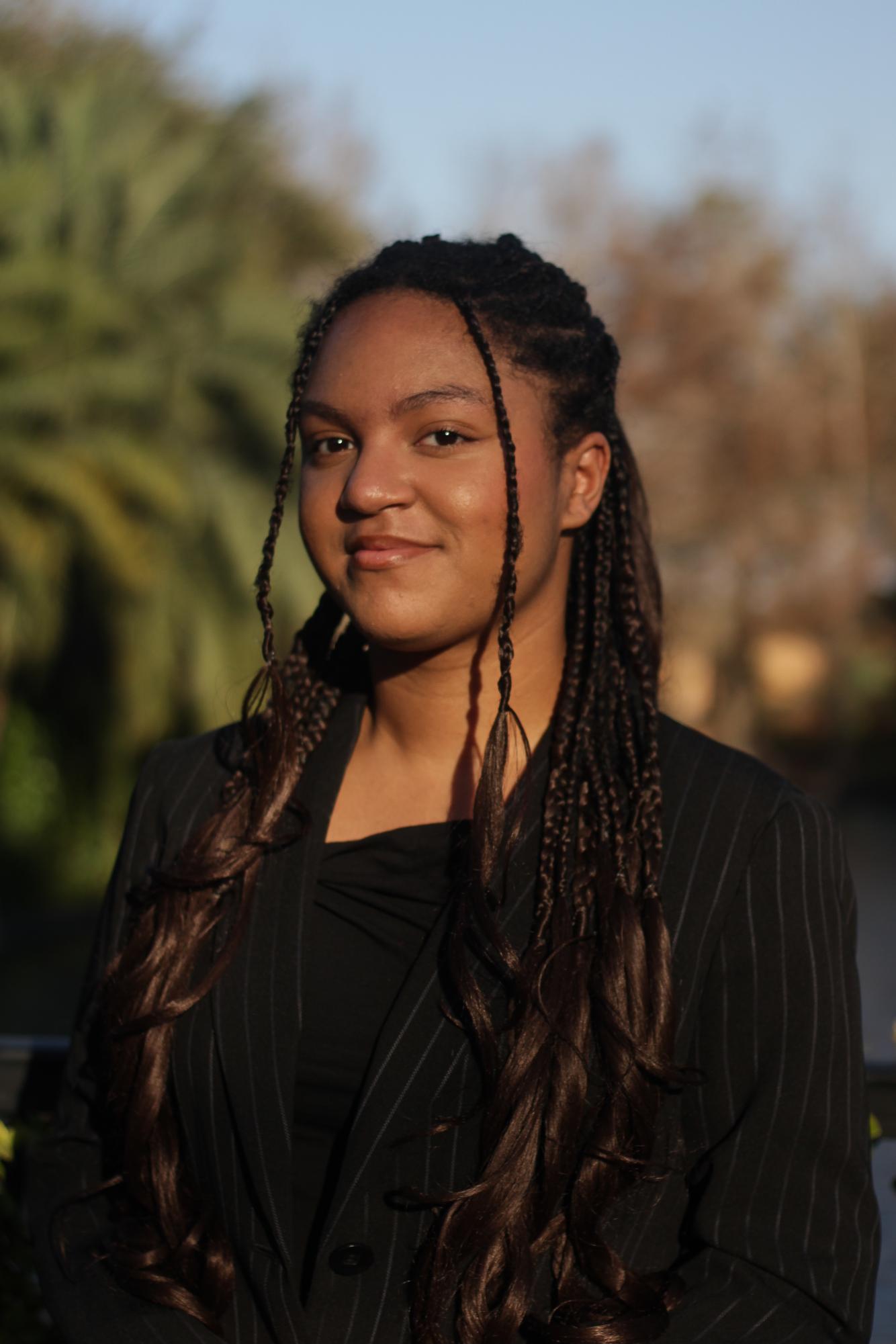
Ella Maurice is a freshman at Brown University.
How do you feel the MSD shooting affected the Parkland community and the people you knew?
I was really young when it happened. I was in fifth grade, and at the time I didn’t really understand the magnitude of what had happened. It was the first time I had ever been exposed to something like that. Even at that age and not fully understanding, seeing people come together with March for our Lives and just the response in town after that, I felt very moved by that. Attending MSD later, I got to know a lot of teachers that were there. It was a horrible thing that happened, but I think our community is stronger because of it. I know that at MSD I felt safe. I knew that my teachers were prepared and that they had prepared me. It was really great seeing how our community has gotten stronger and come together, with things like the Day of Service. And it’s still hard sometimes; I remember the day of the verdict and seeing how my teachers were affected. You can wish these things have never happened, but at the same time, I don’t think it’s a stain on our community. I think it’s just proof of who we are.
When you were younger, was it something that felt very unexpected?
Definitely, it was Valentine’s Day. It was like a normal day at school. I was in aftercare, waiting to get candy. These types of drills never happened on holiday, so it was very out of the blue for me. I thought it was real or something real. I didn’t really know what it was. I didn’t tell us when I was at Heron Heights [Elementary School]. But on a day like that, when you go on a lockdown, something feels off. I remember when the lockdown was lifted, my mom, she worked pretty far away, like more than an hour away, and they had been dismissing everyone one by one. Because the roads had been blocked off due to the police, I was one of the last people to leave from school. They still hadn’t told us what had happened, which I think is appropriate, we were elementary schoolers, but I just remember I was freaking out because I didn’t know if something had happened to my mom. I didn’t have a phone at school. I didn’t know if I could reach her. It was definitely a surprise, even coming home and really finding out what actually happened. You definitely don’t expect it, especially at my age.
What drew you to Brown University when you first applied?
I would say the open curriculum, the famous thing about Brown. The open curriculum means that there are no general education requirements. You’re not required to take a specific amount of history classes or science classes or math classes. You have certain requirements for your major, but you’re really free to take whatever electives you want in any department. You can kind of customize your major as well. You can make your own. You pretty much get to design your entire degree yourself. I was applying to schools as an interdisciplinary arts type of student. I wanted to combine art and tech and the open curriculum at Brown. It’s very much about being interdisciplinary and combining things in unique ways. I really liked a lot of the art specific classes they had and they had a lot of resources. And the things that I wanted, I also just wanted to be in New England. I liked the environment. I was not expecting to get in, but it was definitely a happy surprise. I lived in Florida my whole life. I wanted to experience the winter. I love the architecture in New England. I think New England is so beautiful. I wanted to be somewhere walkable and somewhere where I’m at least close to a city. Boston is an hour away by train or by car. New York, I take the bus there. It’s like a day trip, pretty much the same amount of time it takes to get to like Disney from Parkland. So I just love the area. I love the atmosphere. The weather, I am learning to love it.
What do you study at Brown University?
I am now double concentrating in visual arts and engineering. My engineering degree is, I would say it’s closer to a minor, but I would be graduating with a bachelor of arts in visual arts and Engineering. A typical engineering degree is a bachelor of sciences, but within visual arts I’m doing a lot of installation and multimedia work. Within engineering, I’m allowed to take any class in the department, so I’m looking at things like mechanical material science and fabrication and industrial. At Brown, they have a department and a building that’s five minutes from my dorm called the Creative Arts and Technology Center. And they have so much stuff there. They have a photo studio, they have projectors, they offer classes there that are specific for multimedia and tech arts. We have a creative art and technology center. I also just like the art department, the professors are really great. The art history department also has a lot of interesting classes. I just took a class on the history of art and technology and I’m planning on taking another class in dance and architecture, the history of that. I’m able to take classes in the theater department, in the art department and the computer science department, in the film department, and not be tied down by my major.
What were your feelings and emotions like on the day you got into Brown University?
It was definitely a stressful day, because I had five college decisions that I opened all at once. I don’t think I processed it at that moment. It was the third school, the second or third school that I had opened. And I remember I screamed, I called my mom. I was like, ‘I got into Brown. I got into Brown.’ She hugged me. I don’t remember the specific words she said, but I think it was just like noises of excitement. I was very happy, but it didn’t feel real. And then I had to sit there and open up my other decisions after that, but I was shaking, and I kind of already knew at that point this is where I’m gonna go. So I was definitely very happy. I was definitely in shock.
Did you feel safe at Brown University before the event?
I definitely did. I heard a lot of people saying that the day that happened, and I guess I’m definitely guilty of it too, you never think it’s going to happen to you, especially when you’re at a school like Brown. I think there’s kind of this air that like, oh, that wouldn’t happen here. You know, everyone here is educated, everyone here, and not to say that people at other schools aren’t educated, but it’s just the atmosphere. It feels like the school is, like, so far removed from the rest of the world. You never think that that would happen. I never had any reason to feel unsafe. The campus is very small. There’s emergency alert systems everywhere. I wouldn’t say there’s like a heavy police presence, but there’s definitely [Emergency Medical Services] all around. And you know, you’re never really alone.
What are your feelings about the people that you have met at Brown University?
I love the people that I’ve met at Brown. I love my friends. I feel like everyone I meet there is so cool and so inspiring. I just love meeting passionate people, and I feel like everyone at this school is very, very passionate. We’re all there because we’re trying to make our own path. We’re all there because we’re doing some sort of unique major. It’s definitely a friendly atmosphere.
Have your feelings changed about Brown in the aftermath of this event?
No, I had a really great first semester, but this is definitely something that’s going to stay with me. It would be hard to say the opposite, but this definitely doesn’t stain my experience of Brown. I love the school. I love the people there, and we’re not the ones at fault here. If anything, it made me feel closer to my community, how people came together, especially in the week after having to help each other and support each other.
In what ways do you feel the events of Dec. 13 will stay with you?
I think the day it happened, I don’t know if I fully processed it. When I got home, I was really angry the entire time. I was really sad the entire time, but my family was a big support in the time after, so I’ve been able to go back to living life. But there’s still this sense of, not fear, but increased vigilance whenever I’m out. When I see something suspicious, I am a bit more jumpy. I definitely feel more protective of my family when I’m out. I don’t know how it’s going to feel when I get back to campus. I’m excited to go back to campus, but the engineering building is where it happened. I’m going to be in that building in two days. I’m going to be back in the library where I was during the lockdown. I think I’ll be fine, but you don’t know. I’m definitely not going to forget, I also just feel emboldened right now. I think many of us do, to become more politically active and speak up, because this is a political issue. Unfortunately, this only happens in this country, and so this is going to be something that I’m hopefully working against for the rest of my life and speaking out against, because this should not be happening.
In what ways would you like to become politically active?
Definitely with on campus groups. I’ve never been a super loud person on social media. But even before the shooting happened, I was looking at ways to get involved with student activist groups, in administrative roles, helping organize, helping with PR, helping get messages that I believe in out there. Also, helping other people on campus find support. I will say, coming from MSD, I feel like I knew more than some of my peers. I was a bit more prepared, just in terms of knowing the types of things you should do after the fact. There were a lot of people that I met that like they’d never done a drill before, or that I heard while we were locked down in the library, that they’d never done a drill before. Compiling resources for people would be a big thing.
Do you think the lack of drills at Brown impacted how people acted during the event?
I’ve never heard of active shooting drills in colleges. I was in a study room when the lockdown was called, so my reaction and the people I was with, we kind of just hid in place, locked down immediately. I didn’t really get to see that much of what was going on where I was. I don’t think that the town was necessarily prepared, or the school. I don’t want to speak badly on the law enforcement or the safety advisors at Brown, but we got an alert more than 15 minutes after the shots were actually fired to go on lockdown. I know Rhode Island School of Design (RISD), which is literally five minutes away from Brown, they didn’t get an alert until almost an hour after the event. I don’t think there was enough coordination, at least in the beginning. We had a staff member nearly an hour until lockdown who came and ushered us into some room. The cops came knocking at our door, and then another set of cops came knocking at our door. We had to call 911 to figure out if we should actually leave. I don’t know if any college would be prepared in that sense, I haven’t heard of drills in universities.
Why do you think these delayed responses and lack of coordination happened?
It’s that mindset that it’s never going to happen to you. Also, Rhode Island’s a very old state. We found out that the shooter escaped behind the building, and that part of town is just residential neighborhoods. There’s barely any street lights, all these old, old houses, no cameras. With the infrastructure in the state, it’s very easy to get out, unfortunately. I don’t think Brown or RISD ever expected something of this magnitude. I don’t think the cops were expecting something of this magnitude. You never think it’s gonna be you.
When did you first become aware that something was happening on campus?
I think it was around, I can’t remember if it was 3:30 p.m. or 4:30 p.m., but it was before the lockdown alert got sent to us. In the study room I was in [in the Rockefeller Library], my friend was on Sidechat, which is an anonymous message board for college [students]. There was a message that someone had posted that there were shots fired at Barus and Holley. My friend who was in the room, her brother was in that building. So she texted him and asked what was going on. He confirmed that there was something happening, but he wasn’t fully sure. I called my mom. It was me, my roommate and then two other girls. We all called our moms. At the time, I didn’t think it was a school shooting, I thought it was maybe something that had happened on the street nearby. So I called my mom, I told her, ‘You’re probably going to hear about this. I think it’s fine. I don’t think you know anything’s really going to happen, but I’m fine. I’m safe.’ And then a few minutes after that call, the lockdown got called, and so I went around the floor as fast as I could to try to find a closed room that we could go into. The study room we were in was like glass. You could see into it, you could see that there were people in there. But all the doors were locked, so we all went back into the study room. A few people that we didn’t know came in, and we kind of just huddled in a corner behind the table. We were there for about an hour, I think, before a staff member came in and she brought us into a locked room. We were in that room for a while, I think till at least seven. We all stayed quiet for the most part. We kept the lights off. People had the news on. Some people were checking Twitter. Some people were trying to listen to the police scanner. There was a knock on the door at one point, and it was one person, and they said they were police. We didn’t open it. Sometime later, there was another knock. A girl in the room decides to call 911 and ask if it was the police. And 911 sent the actual police, so the next time someone knocked we came out of the room. They brought us to the staff common area. They had brought us and everyone in the library all to one room. I think we were the last room in that library to get cleared, but we were in there until about 10 or 11. Then, they brought buses to take us to the gym.
What were your emotions like during the lockdown?
I was scared. I was crying for a lot of it, which I didn’t expect. I think in the beginning, I also just felt very protective because I could see my roommate and my friends were freaking out. I was freaking out as well, but they were more visibly affected than me, so I was trying to calm them down. I think we were all just kind of trying to be together. But in the second room that we were brought to, the dark room, I was just by myself, under a table. I was really upset. There was a lot of misinformation going on from Twitter and Sidechat. So I started getting more scared. At a certain point, there were reports on Twitter that 30 people had been injured, and at that time, also it was around 7 p.m., the police gave a press report that they did not have a photo of the perpetrator and they had not identified him. So that was pretty freaky. And then at a certain point, when we were in the common room with everyone in the library, my parents and my roommate’s parents were trying to book flights to get us to come home. We didn’t know if the airport was going to get shut down. We didn’t know if we were going to be able to get our stuff that we left in the room. We didn’t know if we were going to have time to get back to our room, to get our IDs to leave. So it was a lot of fear just at the situation, not knowing where we were going to be, not knowing where the perpetrator was, not knowing how many people have been hurt. It was a lot of fear. I think also something that was, I wish I had a better word, but just freaky to me, was coming out of that locked room and seeing a ton of cops pointing guns at you, telling you to come out with your hands up. Yes, it is to protect you, but in the moment, it was a scary sight.
What did you do after the lockdown was over?
Me and my roommate, my roommate is also from Florida, so we were on the same flight to leave. Me and my roommate got back to our room around 2:30 in the morning. They had the school shuttles take the people who lived close to the gym back to their dorms. So the lockdown had not been lifted, but they had cleared the dorms on north campus, which is where I live, and they took us back. So we packed up all of our stuff, and I called the non-emergency police line to see if we were allowed to get an Uber off of campus to go to the airport. And we were, so we got to the airport around like five in the morning. The lockdown wasn’t lifted till like six or seven, but we were in the airport at that point. Our flight left. Our flight was supposed to be for seven, but it got delayed, so it left around noon.
What did you do in the days after, once you got home?
Immediately I ate, and then I went to bed because I hadn’t slept. By the time I got home, I hadn’t slept for 25 hours, so I took a big nap. I was with my family, a lot of my friends were home, so I started visiting my friends, working on Christmas presents. It was a lot, I just continued like it was winter break. I knew that being with people would help me the most, so I didn’t want to isolate myself. I was still upset. I remember that there was a night we were watching “Stranger Things” with my family. Nothing really happened in the episode, we were watching season two, but I just started crying in the middle of the episode because it made me think of how impermanent life is. I sent a text message to all my friends, like, if anything ever happens to me or ever happens to you, I just want you to know how much you meant to me. Because I remembered the call that I had placed, calling my mom after we heard the first time, and something just made me think, if that was the last time I talked to her. It was just being with people through all the feelings, talking it out, letting people know what they meant to me. That was my focus in the first week. That was the holiday season, I got to see my friends and had a lot of fun. So I think I’m handling it well. I would not say that I’ve had, you know, a super devastating response, which I’m very grateful for.
What did you tell your parents about what happened at Brown?
I mostly talked to my mom about it. I just told her the full story because they had been watching on the news. I had been texting her throughout, trying to figure things out with the flight and whenever we moved location. So it was kind of just to get it out of my system. I think they knew for the most part, like what had been happening.
How did you notice the situation affected your friends and people around you at Brown?
I think everyone was justifiably very scared. It was just a lot of fear. I was more quiet about it. One of our friends lives on the floor below us, but she stayed with us for a little bit before we left for the airport, just because she didn’t want to be alone. And my roommate, like when we took our Uber to go to the airport, she wanted to see if we could get a police escort. We couldn’t, but it’s just things like that, especially because we were still on lockdown, they didn’t know where the man was. A lot of fear, just like being out in the open. We walked our other friend back to her dorm before we went to ours. It’s just a lot of shock, I think we all felt very similarly, it’s just we express it in different ways.
How do you feel like this situation affected the Brown community and nearby schools?
I know a lot of RISD students were also very afraid and very angry about the delayed response, the delayed alert that they didn’t get. What I saw within the Brown community was really hopeful and really encouraging. People banding together to get people Ubers and Lyfts for free to get home or to get to the airport. You know, some of the restaurants by campus giving free meals. People sharing resources, people offering to talk, even to strangers. You know, organizing moments of silence. I think our community came together very quickly and very well. And you know, we’re all going through it. We’re all affected. And even through that, just taking the time to be together and be there for each other, I think, was very, very special.
How did online speculation and misinformation — including false information spread to students and false shooter accusations — affect the overall Brown community?
A lot of it, when it comes to misinformation online in these situations, it’s highly politicized. I feel like in that situation, you’re just so focused on your own safety, no matter what people are saying online, like you just have to be alert. You have to be like we were on lockdown. No matter what people were saying online, we kind of just had to stay where we were. I think you kind of have to take everything with a grain of salt. Stay where you are, stay safe. A lot of the misinformation also just comes from people that you know are not on campus. They had no idea what was going on, and both sides were trying to pin blame on a specific person or a specific identity. But in the moment, it’s not about politics. I know to the rest of the world, when you’re not there, that’s kind of what you’re thinking about. But while we were there, I think everyone was just trying to be safe and focused on being safe.
Do you think it’s important that people focus less or more on the politics of the issues that surround the Brown shooting?
In my opinion, I think that we need to focus on gun violence and gun restriction as a political issue, but oftentimes shootings are taken as an excuse to talk about identity politics, which I completely disagree with. It’s not about race, it’s not about religion, it’s not about political party. The minute that that becomes a conversation, I think that is entirely inappropriate and unconstructive. I don’t think it’s helpful to anyone. I think it’s distracting. But I do think that we should be having conversations about gun control and gun violence and unfortunately, also, you know how we can take measures in our schools and in our communities to prepare people for these things and prevent these things and recognize the signs and the warnings. We shouldn’t have to, but we do have to. This is the country that we live in.
Do you think this will happen again at other universities across the United States?
Yes, unfortunately, there’s no way it won’t. I’m not even the only person I know who has gone through this in this year. I remember, while I was at MSD, my senior year, one of my friends at FSU had gone through the FSU shooting, and that had been seven months before what happened at Brown. There’s gun violence in our country every day. There’s gun violence in our schools multiple times a week. I do not see this stopping with us. Definitely not.
Do you think there is potential for enough change to be made to stop school shootings?
I don’t know if it will ever happen, but I think it can happen. This epidemic we have of school shootings only happens in the U.S. This does not exist in any other country. I think it is possible to prevent this and to end this through legislation and through politics, but I don’t think it’ll be easy. We have to try our absolute hardest. The NRA has a lot of power in the U.S. I think also just constitutional interpretations of the Second Amendment are always going to be a debate. There’s just a lot of opposition. People are very averse to having their rights to their guns taken away. There is a lot of people in this country who do feel safer having guns, and I’m not going to invalidate that, I just think that there a compromise needs to be made, and I think… it’s going to take a lot of conversations and debate and lobbying to get to that point.
How did you feel about the overall public response and media reaction to the shooting?
I honestly tried not to look at the news a lot after I got home, like I tried to just get the facts. I was not listening to any expert, like analyst breakdowns. I wasn’t trying to read any op-eds or go on Twitter. Once I got home, I was like, I just want to know when this guy gets caught. I think I just checked, like, the timelines a few times a day. It upsets me, honestly, when things get politicized, especially because at a certain point they had captured someone, or they had taken someone into the station for questioning. Everyone started doing background checks and trying to blame certain beliefs or certain people, and he wasn’t the right guy. And at that point, I was like, I cannot watch this. I wanted to protect my own peace. I was really just focused on my friends and people at school and doing what I can for them. There was a guy from Brown in my year who had done an interview with CNN and they had misquoted something he had said. I had a teacher at Stoneman Douglas who had connections at CNN, so I sent her a message to see if she could help him. I believe they misinterpreted something that he said.
Do you feel there was enough preparation prior?
In the moment, I was very upset that they hadn’t caught him and that it took them so long to catch him, but I’m still very grateful to the law enforcement who responded on that day. I’m very grateful to the Brown staff for keeping us safe. I can admit that I do think there was a lack of preparation, but at the same time that is not me wanting to be disparaging towards anyone. I’m very, very grateful to everyone who was involved in keeping us safe. Is anyone really prepared for this kind of thing? We shouldn’t have to be. So I don’t mean for it to be some scathing insult for me to say that there was some time that the school was unprepared.
Did you notice Brown University offering any community resources?
Yes, they send emails frequently with a lot of resources remote and on campus throughout the break and even for this week coming up. They’ve also increased security on campus and increased the amount of mental health personnel and community resources. They’ve definitely done well. I’ve been home, so I haven’t really used a lot of them. Being from Parkland, I’ve mostly reached out to people I know here like my friends at FSU, people that have had the same experience. I’ve gotten a lot of support here, but I have referred some of my friends when you know needed to the places that they can reach out to.
How has speaking to people from other schools helped you?
A: It felt nice just to know that people cared, and to get the support from your friends and to just hear that they’re there for you through anything. It’s definitely hard to talk about, I think at least with me, sometimes I didn’t know when I could bring it up. With my friend from FSU, I called her while we were still on lockdown, and I asked her, like, ‘how long did it take for you to get off campus?’ I knew from her story that I just needed to get home. I needed to be with my family. So I knew more firsthand from someone that I was really close with [about] how I should respond to protect myself and to make this easier for myself and for the people around me. It was having that support and kinship with someone who had gone through something similar.