
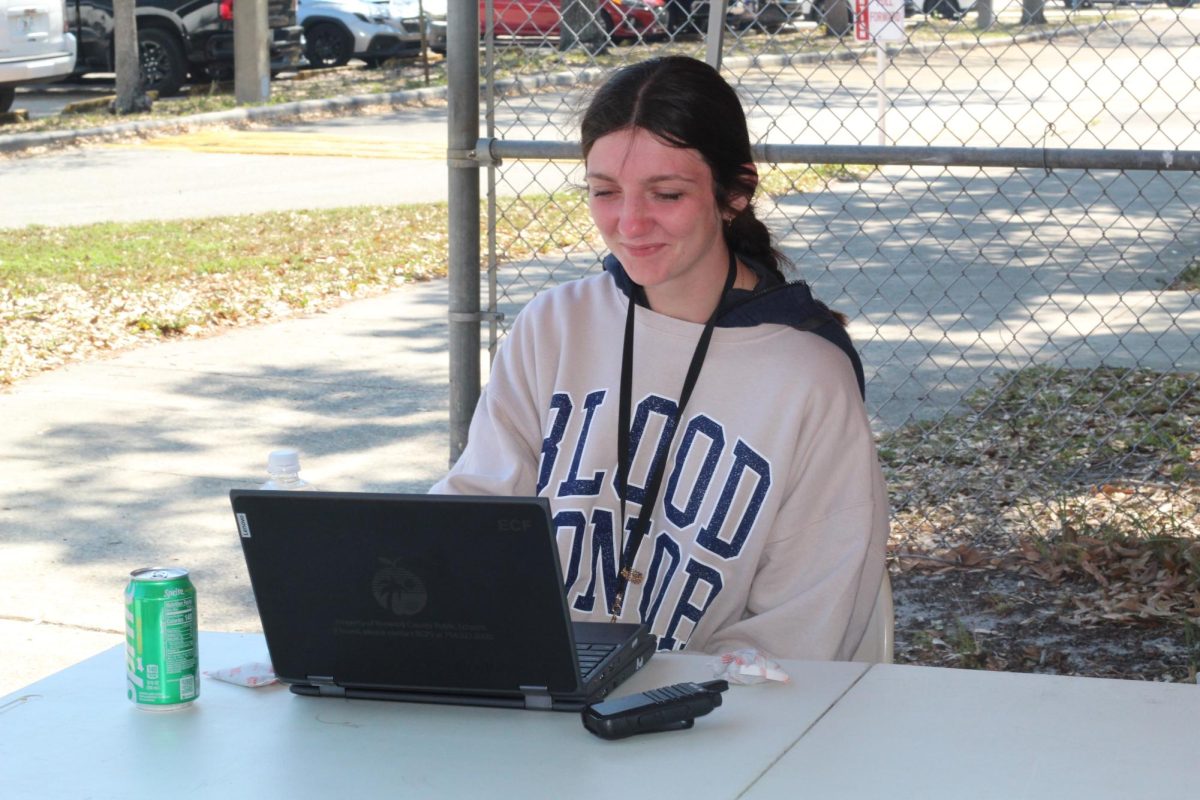


The Junior Reserve Officers’ Training Corps (JROTC) set up their third blood drive of the year on Tues., Feb. 24, all day in the senior lot. The drive serves as a fundraiser for the organization, allowing students to attain scholarships.
OneBlood, an organization that collects blood for hospitals in need, partners with JROTC every year to host blood drives. Before giving blood, students needed to ensure that they were at least 16 years old and weighed at least 110 pounds.
“I think the blood drive is important because number one it saves lives like we say in the announcements, a single pint of blood can save up to three lives and that is true,” senior and JROTC officer Paul Ditman said. “Another important reason to me is that it is a huge way that we raise money for our program, which helps us get a lot of important equipment and helps us raise money for scholarships.”
Students could donate whole blood, platelets or double red blood. Students were also able to choose which class period to have their blood drawn. The entire process took about 30-40 minutes and the drive ended around 2 p.m.
To guarantee students’ safety, JROTC made sure each student ate before and after blood was drawn to prevent them from passing out.
Although this event has thrived in past years, less students donated blood this year, impacting the scholarships available to JROTC students. While the blood drive usually brings in around $1,000, this year it only brought in half that.
“We only got 33 donations, which is the lowest blood drive we’ve had in the seven years I’ve worked here,” JROTC instructor Lieutenant Colonel Mark Anders said.
Due to the lack of donations, scholarships this year will be less than in years prior. JROTC also gets money through their booster club, however, they cap the amount that can be used for students.
“It’s honestly kind of sad because a lot of the reason why people aren’t donating is because I feel like they aren’t being as selfless,” senior and JROTC officer Ava Selby said. “They don’t really think about it because they think oh it doesn’t affect me so why should I do it even though you’re doing it for people that need it. I think it’s affecting our class because we’re not able to fundraise as much money for our program.”
This marked JROTC’s last blood drive of the year. They hope to continue hosting them in the years to come and to see an increase in the number of students looking to participate once more.



![Fruit Frenzy. Junior Kevin Miranda pushes a cart of fruit cups that are going to be put into breakfast bags. The bags were distributed during the First Responders Breakfast on the Day of Service & Love on Fri., Feb. 13. "I think we should always support our [first responders]," Miranda said. "They're the ones who put their blood and sweat into keeping us safe."](https://eagleeye.news/wp-content/uploads/2026/03/Nvbo42YAtJ4hkEIHrTSFTPVyOBiwB4qYlkuRQ9AL-1200x800.jpg)
![Get Sandy. Junior Nathan Borisoff sands down a wood pole in Marjory's Garden on Fri., Feb. 13. He and other students volunteered to renovate the garden on the Day of Service and Love. "I try to come out [to the garden] every Sunday, get that good work in, get in a workout and have a little bit of fun," Borisoff said.](https://eagleeye.news/wp-content/uploads/2026/02/sz0vKiapj8RtIimW3dY1eQ4BaWuJWnv2lAEdSmjV-1200x800.jpg)


![Pitch Perfect. Tenor and sophomore Aaliyah Anglade and bass and junior Juan Tejada prepare to sing during the Winter Concert on Fri., Dec. 12 in the auditorium. The pair was part of a larger group of the chorus that performed "Everything Red and Green" by Anita Cracauer. "[Rehearsals were] mostly just a lot of practices during class and listening to the song on repeat and being able to blend all of the different voices together, as well as a lot of after school practices for the small group song," Tejada said.](https://eagleeye.news/wp-content/uploads/2026/01/ka5Wcp44ZWpCZbdfZnnjQ022gSG59xO7cPYREETx-1200x800.jpg)


