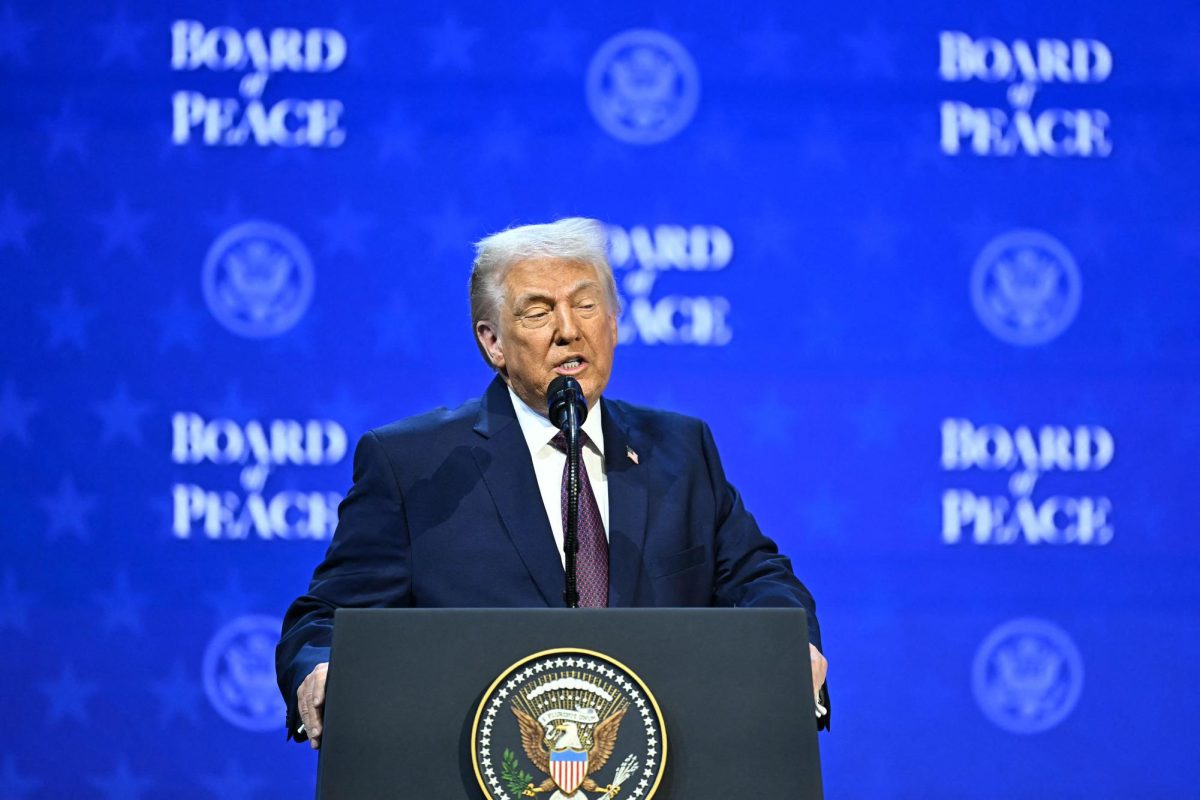

On Jan. 15, 2026 the Board of Peace, initially created to oversee the rebuilding of the Gaza Strip following the Israel-Hamas War, was founded by President Donald Trump. The United Nations (UN) Security Council adopted United Nations Security Council Resolution 2803 on Nov. 17, 2025, which created the Board of Peace. The board is a U.S. coalition — a temporary alliance of distinct groups working towards the same goal, separate from the UN. Though it was formed with the intention of rebuilding the Gaza Strip, the board’s charter suggests a bigger mandate to interfere in other global conflicts.
The board aims to transform Gaza into a developed and secure region. The U.S has been providing aid to Israel, and the Board is meant to oversee the creation of a ceasefire plan.
The board has held two meetings; the first one was on Jan. 22 and the second one was on Feb. 2. Discussions were focused on immediately helping Gaza, but its future structure and effectiveness remain unclear due to the lack of participation from so many Western powers.
Initially 50 countries were invited to join the Board of Peace but there are 28 founding members, with over 40 that participated in the initial meetings. Although the board was formed to rebuild Gaza, there is no Palestinian representative on the board. Some countries that are members of the board, though, include Israel, Saudi Arabia, Egypt, Turkey, Qatar, the United Arab Emirates, Jordan, Bahrain, Morocco, Indonesia, Pakistan, Argentina, Hungary, Kazakhstan and Vietnam. These countries all had to pay a fee of $1 billion to become permanent members of the board. The money is supposedly intended to go towards the rebuilding of the Gaza Strip.
The board is led by Trump, who serves as the chairman and has unchecked authority. Trump has the power to veto as well as to exclude or include whichever countries he chooses.
Other organizations and countries including Italy, Greece, South Korea and the European Union (EU) will attend board meetings as “observers.” This means they will be listening in on the meetings because they have concerns of their own, but will not be full members. Many European leaders are concerned about the board undermining the UN.
The EU declined their Board of Peace invitation because one was also extended to Russia. Ukraine declined its invitation because of Russia as well. Many people are concerned that the inclusion of Russia means the Board of Peace will not fulfil its peace goals given its actions in Ukraine. Ukrainian President Volodymyr Zelenskyy even said it was “absurd” that Trump extended an invitation to Russia and Belarus, an active accomplice in Russia’s war.
The Vatican also received an invitation to join the board, but officially declined as of Feb. Cardinal Pietro Parolin confirmed that the Vatican is choosing not to participate. They are skeptical about the structure and goals of the board, just as Italy, Greece, South Korea and the EU are, and believe that international crises should be handled by the UN, rather than the Board of Peace.
Additionally, many countries in Europe declined their invitations, choosing not even to participate as observers. France was the first country to officially reject its invitation. France was then followed immediately by the United Kingdom and Germany. These countries rejected their invitations because they are concerned with how the board is being created and the ways in which it will impact international law and their countries.
Norway, Sweden and Slovenia have also declined their invitations. Slovenia said that it was too dangerous and the Board of Peace may potentially undermine the UN charter.
“I think that the countries are right for not accepting the invitations because it’s logical and wise to think about their own safety before helping others,” sophomore Ananya Fukey said.
President Trump revoked Canada’s invitation to the Board of Peace. He did this following a meeting in Switzerland during which Canadian Prime Minister Mark Carney criticized authoritarianism and exclusion, which Trump viewed as a direct attack on his policies.
“It doesn’t seem like a great idea at this point to team up with Trump,” freshman Liliana Lugo said.
Many nations and countries have concerns about whether the Board of Peace will be beneficial or harmful to the world, Gaza and the UN. The U.S. has received both backlash and support from other nations depending on the extent to which the Board of Peace benefits them.