
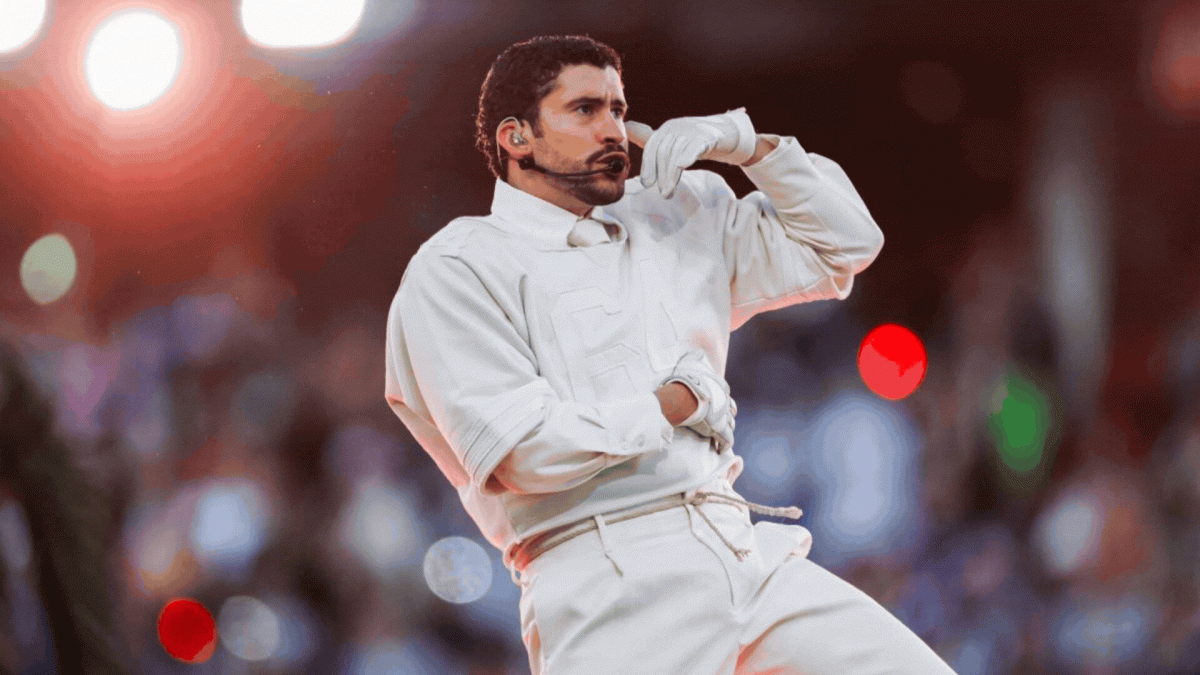


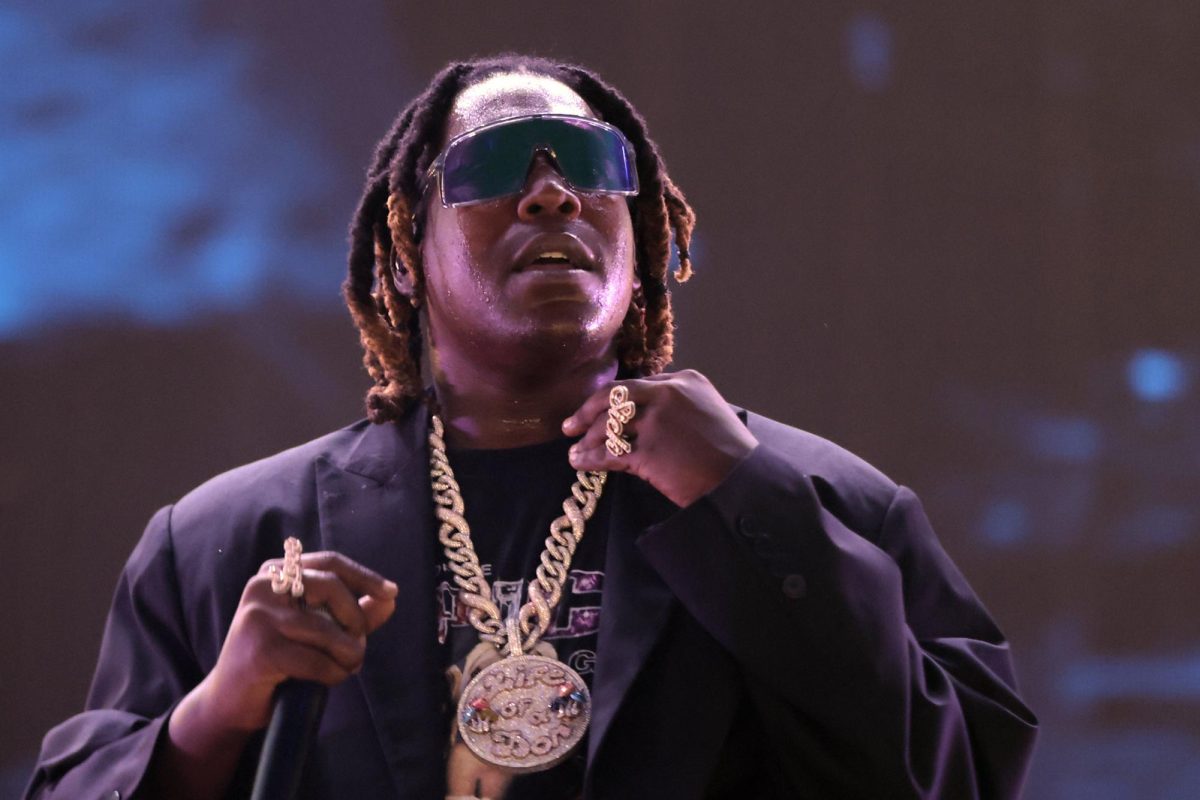
On Sept. 28, 2025, the NFL announced during the Sunday Night football game that the famous Puerto Rican music artist Benito Antonio Martínez Ocasio, better known as Bad Bunny, would perform during the 2026 Super Bowl halftime show on Sun., Feb. 8. The football game was between the New England Patriots and Seattle Seahawks.
In recent years, a variety of artists have performed during the halftime show, including Rihanna (2023), Usher (2024) and Kendrick Lamar (2025). Among the songs Bad Bunny performed were “DtMF,” “Tití Me Preguntó,” “BAILE INoLVIDABLE” and “NUEVAYoL.” Lady Gaga and Ricky Martin both made special appearances during the performance.
Bad Bunny’s halftime show was streamed by approximately 124.9 million viewers and paid homage to Puerto Rican culture.
Thomas Wolter and Eleisa Aparico had their wedding during the performance, after they invited Bad Bunny to their wedding he invited them to have their wedding at the Super Bowl, Lady Gaga sang a Salsa version of “Die with a Smile” and Ricky Martin sang the introduction to “LO QUE LE PASÓ A HAWAii” before leading into “El Apagón.”
Martin was one of the night’s biggest surprises and the songs he sang focused on the annexation of Hawaii and America’s cruel treatment of the land and its people. Many believe the songs were chosen to warn the U.S. government not to continue treating Puerto Rico like it treated Hawaii.
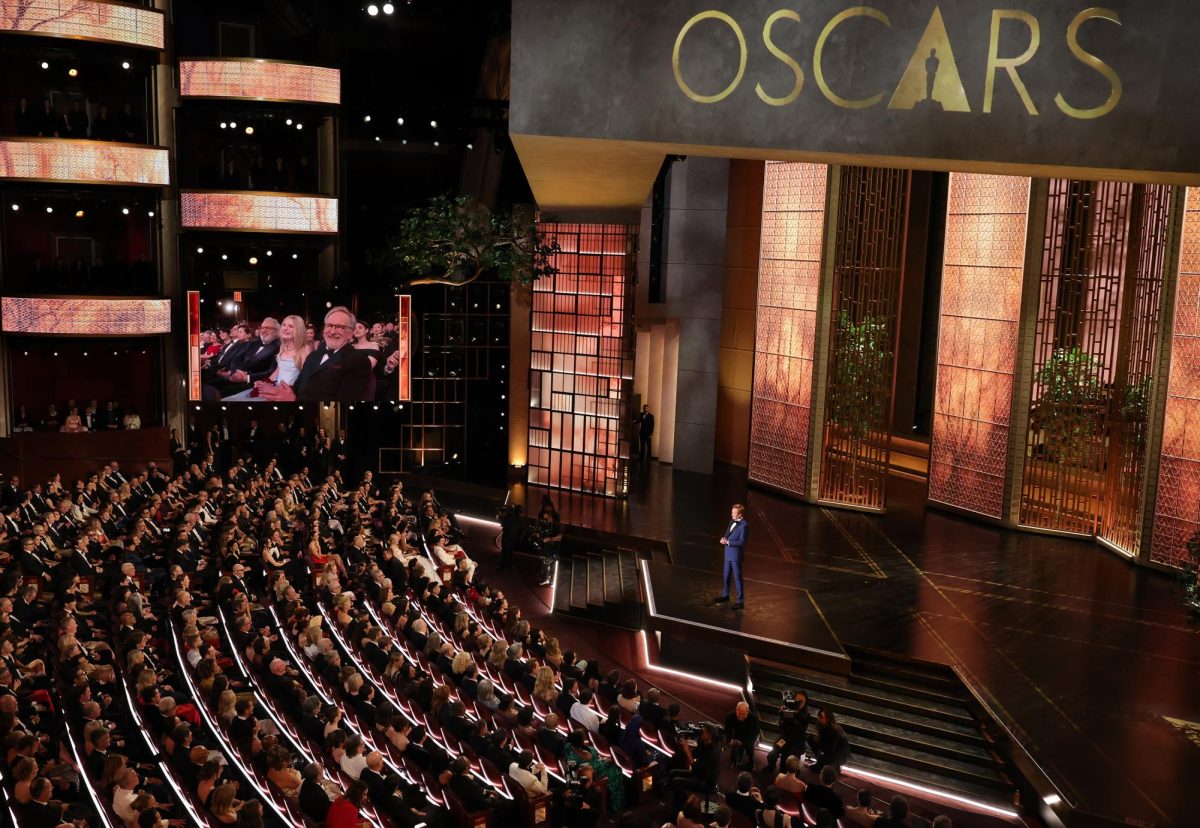
There were also some other well known people in attendance, such as Karol G, Pedro Pascal, Cardi B and Jessica Alba.
The intricate details of the show made many Puerto Ricans, and Latinos, feel seen and heard worldwide. Bad Bunny opened his set on a sugarcane field, reflecting Puerto Rico’s agricultural roots and colonial exploitation while simultaneously honoring jíbaros, or rural farmers. Bad Bunny also performed “El Apagón,” or the blackout, while on top of a power line pole, which was a direct reference to the ongoing electrical power crisis in Puerto Rico; the song itself calls attention to the infrastructure failures and government corruption that plagued the island following Hurricane Maria.
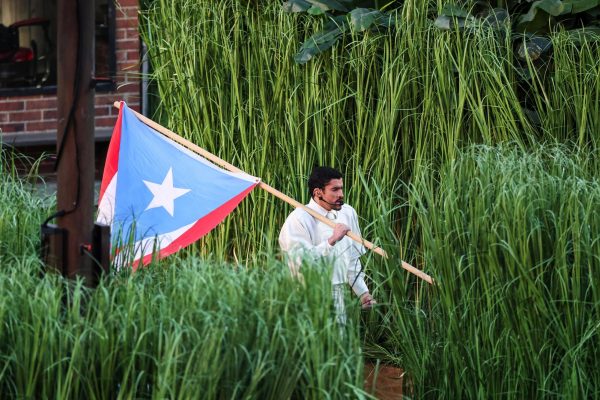
Further, the stage featured a piragua stand, people selling plátanos, domino tables, a nail salon and a barber shop; all of these elements, and more, came together to transform Levi Stadium into a Puerto Rican neighborhood. Meanwhile, traditional Puerto Rican instruments, from the pandera to the cuatro to the cencerro, were used on stage.
The halftime show was between 12-15 minutes long and was a representation of diversity and inclusion in America. Many groups, however, opposed Bad Bunny’s message and tried to silence him.
Immediately after the halftime show, President Donald Trump posted negative comments online about Bad Bunny’s show, calling it “absolutely terrible” and claiming that it did not “represent America’s standards of success.”
Turning Point USA, a conservative organization started by Charlie Kirk and currently run by Erika Kirk, held an alternative halftime show featuring artists Kid Rock, Brantley Gilbert, Lee Bryce and Gabby Barrett. This performance only had six million streams.
Most of the controversy stems from the fact that Bad Bunny primarily produces Spanish music, leading some to believe the performance was only catered toward Latino audiences. Some people and players even alleged that he is not a U.S. citizen and insinuated that the show was “not American.”
However, Puerto Rico is a U.S. territory, making its residents U.S. citizens. Citizenship was originally granted to Puerto Ricans through the Jones-Shafroth Act, according to Legal Clarity, and was signed into law on Mar. 2, 1917. In other words, Bad Bunny is completely American and so was his halftime show.
Still, regardless of his citizenship status, Bad Bunny deserves and is more than qualified as a music artist to perform at the Super Bowl. His music is not only popular all over the country, but all over the world.
Bad Bunny’s 2025 album “DeBÍ TiRAR MáS FOToS” was the first non-English album to win Album of the Year at the Grammys on Sun., Feb. 1. Bad Bunny was also the most streamed artist in 2025, with nearly 20 billion streams on Spotify.
In a survey conducted of 58 NFL players before the Super Bowl, 41.4% said they did not agree with the decision to have Bad Bunny perform at the Super Bowl. Meanwhile, a majority of 58.6% of the players said they agreed.
Some people, as per the survey, believe that since his songs will be performed in Spanish, he should not be playing for an American audience.
This is not the first time a Hispanic person has performed at the halftime show, though. Jennifer Lopez and Shakira, for instance, performed back in 2020. Bad Bunny is one of the biggest global entertainers today, and his selection makes clear that the NFL understands the huge potential that comes with appealing to a Spanish-speaking audience.
“What I’m feeling goes beyond myself. It’s for those who came before me and ran countless yards so I could come in and score a touchdown,” Bad Bunny said. “This is for my people, my culture, and our history. Ve y dile a tu abuela, que seremos el halftime show del Super Bowl.”
At the end of Bad Bunny’s performance, he said “God Bless America” and proceeded to name all of the countries in North, Central and South America. Meanwhile, people waved the flags of these countries, conveying the powerful message that love unites us all.
This message was especially important given recent controversies regarding the U.S. Immigration and Customs Enforcement (ICE). During Bad Bunny’s awards speech at the Grammys he spoke out against ICE, saying, “Before I say thanks to God, I’m going to say ICE out. We’re not savage, we’re not animals, we’re not aliens. We are humans and we are Americans.”
This comment fueled the controversy and mirrors the theme of his halftime show, “The only thing more powerful than hate is love.”
Bad Bunny’s success has been a massive inspiration for Latinos worldwide. Many Latinos feel connected to him and his music and this opportunity for Bad Bunny to perform in the Super Bowl is a celebration of cultural diversity and inclusion within America.










![Air It Out. Goalie Matteo Swetsky (16) passes the ball out of the defensive zone against Miami Country Day School on Thurs., March 26. It was a special occasion, as it was Senior Night, where the seniors were honored for their dedication to the men's varsity lacrosse team. "It was pretty sad seeing them [seniors] go," Swetsky said. "I had a lot of fun playing with them and hanging out with them this year."](https://eagleeye.news/wp-content/uploads/2026/04/kn9PDQ9bftlHl8ZyszGDNF5vKdUYiQoIcqXY4QLk-1200x843.jpg)
![Fruit Frenzy. Junior Kevin Miranda pushes a cart of fruit cups that are going to be put into breakfast bags. The bags were distributed during the First Responders Breakfast on the Day of Service & Love on Fri., Feb. 13. "I think we should always support our [first responders]," Miranda said. "They're the ones who put their blood and sweat into keeping us safe."](https://eagleeye.news/wp-content/uploads/2026/03/Nvbo42YAtJ4hkEIHrTSFTPVyOBiwB4qYlkuRQ9AL-1200x800.jpg)
![Get Sandy. Junior Nathan Borisoff sands down a wood pole in Marjory's Garden on Fri., Feb. 13. He and other students volunteered to renovate the garden on the Day of Service and Love. "I try to come out [to the garden] every Sunday, get that good work in, get in a workout and have a little bit of fun," Borisoff said.](https://eagleeye.news/wp-content/uploads/2026/02/sz0vKiapj8RtIimW3dY1eQ4BaWuJWnv2lAEdSmjV-1200x800.jpg)


