![[Opinion] Strict adherence to dress codes causes more disruption to learning than students' clothing](https://eagleeye.news/wp-content/uploads/2025/07/9ckvyuk6YZiPNGGPvecEzWbGqyYaK4CjFXjwbNE5-1200x750.png)

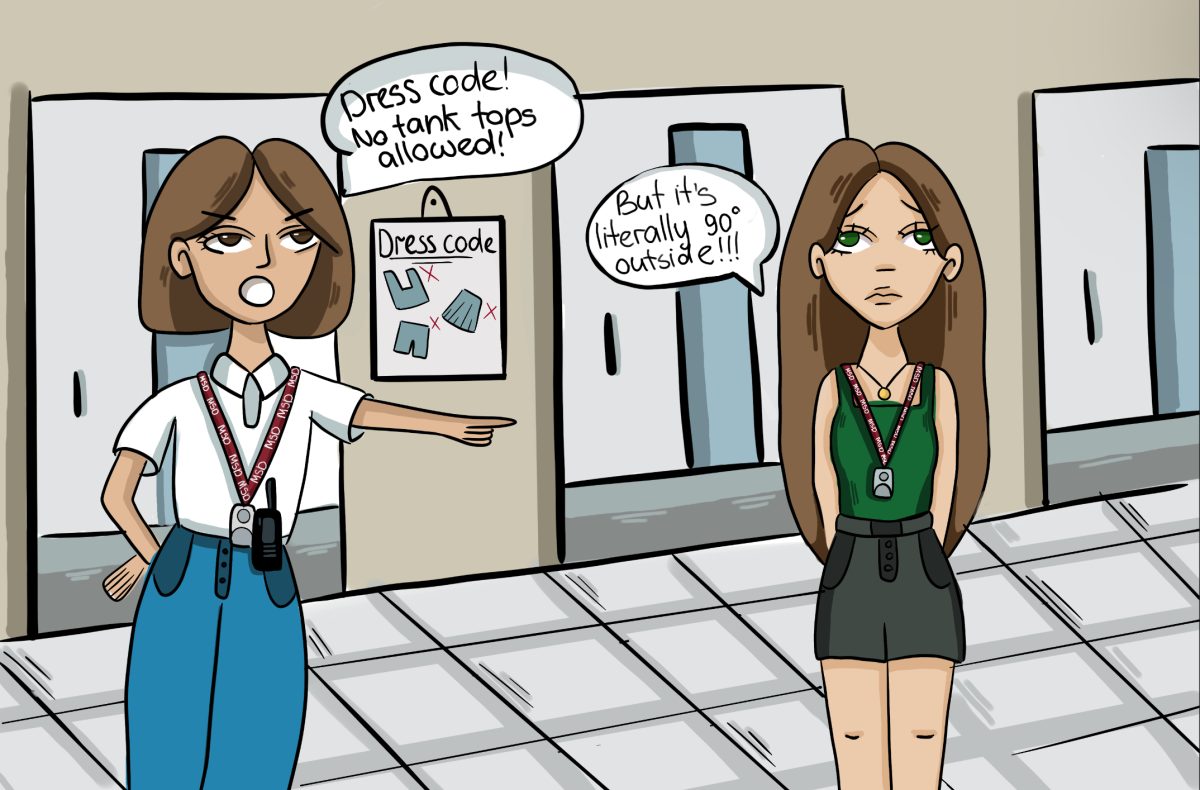
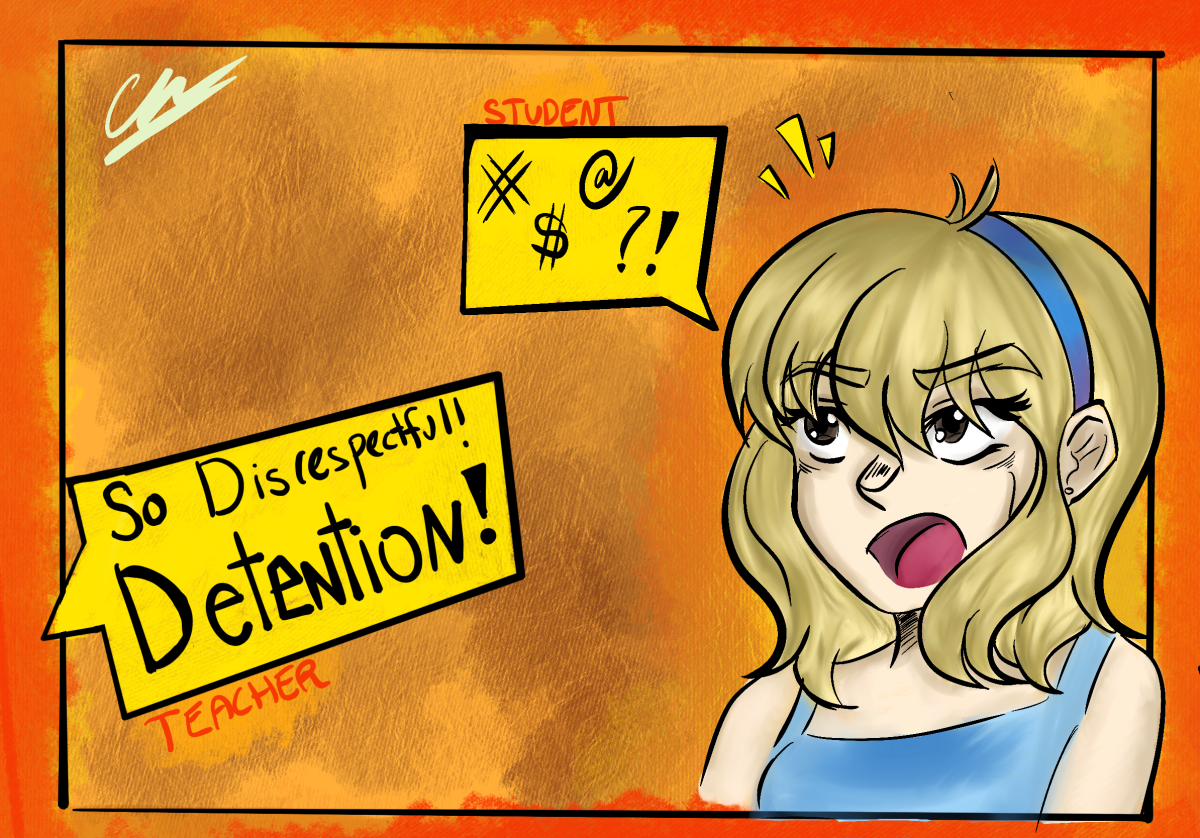
Walking through the gates of school, the only thing on a student’s mind is the test they have first period. However, instead of going straight to class, they are pulled to the side by a security guard and sent to the office for wearing a crop top. Though the supposed distraction was in fact not a distraction to any of their peers in the first place, the attention to the issue does not only highlight crop tops in school, but a flaw in the system regarding dress codes.
Though school dress codes have never directly been addressed by the United States Supreme Court, students have a right to express themselves through clothing unless it disrupts the learning atmosphere. The case of Tinker v. Des Moines Independent Community School District became the precedent for issues regarding dress in school. In the case, students went to school wearing black armbands in protest of the Vietnam War, and the school ordered them to remove them, stating it would cause a distraction.
Ignoring the threat of suspension, the students–Mary Beth Tinker, John Tinker and Christopher Eckhardt–continued wearing the armbands. Through their parents, the children sued the school district for violating their right to free speech and protest. The Supreme Court ruled in favor of the students, stating that if the protest does not interfere with learning, the school does not have the right to censor the students.
The root of this problem and that of dress code are identical, though the situations are different; wearing a crop top should not garner the attention it is receiving. Taking an issue with something students do not pay attention to, unless it is to ask where one student bought their outfit, is a pointless endeavor that causes a bigger disruption to learning than the clothes themself.
Although being appropriately dressed to school is important, the strict adherence to dress code does not highlight the issue of inappropriate dress, but rather the lack of leniency given to students. If leniency is given, students would be able to dress based on their comfortability and the clothing that is available to them.
The dress codes in schools disregard the lack of availability for full length shirts and shorts. Current clothing trends emphasize crop tops, tank tops and other slightly revealing items. In turn, clothing stores produce clothing that falls under that category, making it nearly impossible to find an uncropped shirt in stores.
Finding affordable clothing that allows students to be themselves is another feat that they have to overcome. Simply put, while shopping, finding clothes that oblige by the school dress code is every students’ last priority.
The discussion regarding dress codes is an issue that has brought unwarranted attention to clothing that does not pose a threat to learning. Students should be able to express themselves without the fear of being sent to the office or of the heat beading down on them. A school dress code does help in some cases, but the severe implementation of it needs to be reduced.
This story was originally published in the March 2025 Eagle Eye print edition.