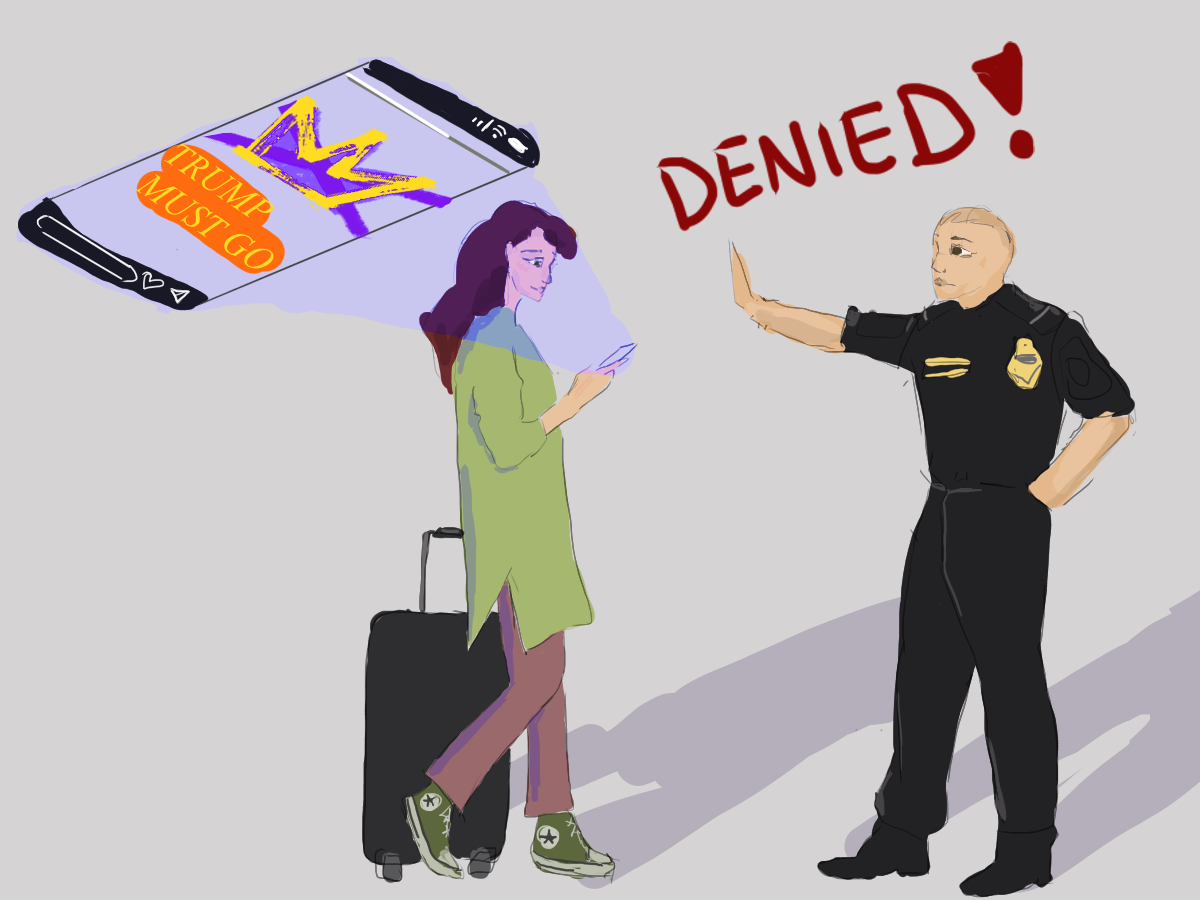

Foreign visitors from over 40 countries may soon need to provide their social media history, telephone numbers, email addresses and even biometrics like DNA and iris scans, to enter the U.S. This extensive list of collected data, particularly social media history, is aimed at suppressing anti-Trump sentiment.
Foreign visitors who are part of America’s Visa Waiver Program will be required to their submit social media histories from the last five years, any telephone numbers used in the last five years, any email addresses used in the last ten years, IP addresses and metadata from electronically submitted photos through the Electronic System for Travel Authorization (ESTA).
In addition, they must include information about their relatives, including family members’ names, telephone numbers used in the last five years, dates of birth, places of birth and residencies. Travelers must also provide biometrics.
ESTA is an online application foreign visitors use to travel to the U.S. for under 90 days without a visa. Visitors using the online system are currently asked for information such as their passport and birth date, as well as any past criminal record. The newer, lengthier requirements suggest a crackdown on online speech.
As per the new guidelines, applicants are asked to make their social media accounts public. A lack of an online social media presence could be seen as a negative, or as something that may be held against them in the application process. Foreign travelers who have publicly posted anti-Trump opinions are left exposed to scrutiny and visa denial. Meanwhile, foreign visitors who are anti-Trump, but without any posts indicating their political opinions, are afraid to speak out and be denied.
Social media and phone searches have already happened at airports. A Norwegian tourist was denied entry into the U.S. after immigration agents took issue with a meme of Vice President JD Vance on his phone. A few months later, a French scientist was prevented from entering the U.S. after immigration officers at an airport found phone messages critical of Trump. The addition of social media history requirements to ESTA will only make these kinds of situations far more frequent.
The Electronic Frontier Foundation said that the new requirements are intended to suppress foreign students’ social media activity. The effects extend inside the U.S., though; this aggressive approach harms America domestically as it is a terrible policy for tourism.
“…Millions of travellers could take their business and the billions of dollars they spend elsewhere, only making America weaker,” The U.S. Travel Association said. “One thing that isn’t in question: this policy could have a chilling effect on travel to the United States.”
The new requirements will have a silencing effect on foreigners speaking out against the Trump administration. People fear that the administration will use anti-Trump posts as a pretense for denying entry.
Further, the State Department announced on Dec. 3, 2025 that it would expand an “online presence review” to include H-1B applicants and their dependents. This further seeks to find reasons to restrict and oust H-1B foreign workers from the country.
This new proposed policy, along with traveler phone searches and punishments being dealt due to personal opinions against the Trump administration, serves to crack down on free speech far outside American borders.
It is incredibly difficult to consistently enforce such a policy with the sheer amount of information from all visa applicants, but the Trump administration has the power to arbitrarily remove whoever they disagree with from the nation.
The public has until Feb. 9 to submit comments on the proposed changes. If these decisions go forth, the potentially retaliatory actions of other nations — which may bar U.S. travelers — remain to be seen.