

H.R.1, known as the One Big Beautiful Bill Act, was signed into law by President Donald Trump on July 4, 2025. The act enacts several worrying policies cutting medical insurance and SNAP benefits for Americans and increasing funding for Immigration and Customs Enforcement (ICE). However, one significant issue that has been overlooked is the legislation’s impact on student loans and its damaging implications for American women in the workforce.
Under H.R.1, both the Grad PLUS program and Parent PLUS loans intended to help students and their families with the financial burden of college in the U.S. were scrapped. What was established on their wreckage was the Repayment Assistance Plan (RAP), which uses the indicator of a degree being “professional” to assign an ‘apt’ amount of student loans.
Annual loans for students will be capped at $20,500 for graduate students and $50,000 for professional students. Thus, whether or not a student’s degree is ‘professional’ will directly determine the amount of financial support they receive.
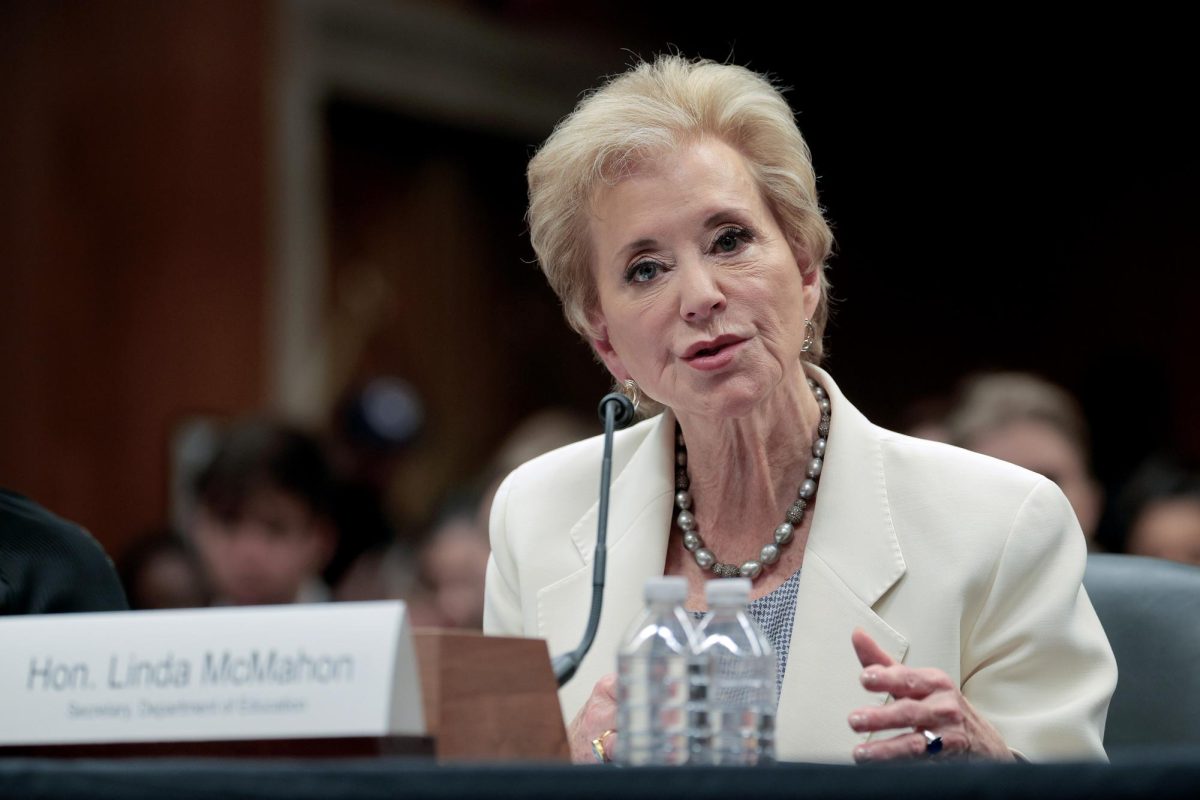
H.R.1 defines a professional degree as a degree that “signifies both completion of the academic requirements for beginning practice in a given profession and a level of professional skill beyond that normally required for a bachelor’s degree.” The Department of Education has named a narrow list of only 11 degree fields that are deemed ‘professional’: medicine, pharmacy, dentistry, optometry, law, veterinary medicine, osteopathic medicine, podiatry, chiropractic, theology and clinical psychology.
What is missing from this short list is nursing, nurse practitioners, physician assistants, physical therapists, audiologists, teachers and others. These omissions were intentional. Women will be the most impacted and will have to carry the disproportionate burden of an unaffordable education. The majority of these professions are also mandatory reporters, a person who is required by law to report crimes.
Nursing, social work, counseling, physical therapy and public health were all excluded from professional status. Meanwhile, chiropractic made the approved list, which is based on a pseudo-scientific practice. Eighty-eight percent of all nurses in the workforce are women and 81% of social workers are women. By contrast, 80% of chiropractors are male.
These restrictions will force thousands of female students toward exploitative private loans or out of advanced education entirely. With the high costs of schooling, especially nursing schools, which is an average annual cost of $61,080, these cutbacks will have severe consequences.
When women enter a job market and dominate, their work is intentionally devalued and underpaid. This practice is the silent killer of the gradual progress women have made in the workplace.
H.R.1 is part of the Trump administration’s carefully constructed plan to pry women away from the workplace through backwards policies that cut DEI programs and necessary medical care. H.R. 1 is only one of the many efforts that attempt to set back women’s progress and follow the conservative values of shaping powerless women.