

The Trump administration fired about 466 of the federal government’s special education staff on Fri., Oct. 10. Programs specifically for special education are worth roughly $15 billion. The negative consequences from this will affect parents, special education staff and children with disabilities.
The U.S. Department of Education has been responsible for special education since its creation in 1979. It has since helped over 7.5 million students with disabilities by providing them with more personalized support. It has also helped teach children better social, behavioral and academic skills.
The Department of Education’s special education programs are protected under federal law. The federal government needs special education staff to ensure the special education programs it offers are funded properly. Thus, while firing special education staff does not require an official act of Congress, it should, given the programs’ importance.
This year marked the 50th anniversary for the Individuals with Disabilities Education Act (IDEA). This civil rights law provides special education to disabled individuals from birth to age 21. IDEA provides the states with funding specifically for the children with disabilities living there. Many school districts rely on this funding for their special education programs.
IDEA requires states to send student data every year to the Office of Special Education and Rehabilitative Services (OSERS). They analyze this data to make sure states are following federal laws. Without OSERS, not all disabled children will have access to the services they once did.
OSERS staff also receives calls from parents and families from all over the country concerned with what resources their children are entitled to and with the quality of their education. Many families rely on OSERS to attain knowledgeable answers. Without this resource, many parents will be left in the dark about things pertaining to the wellbeing of their children.
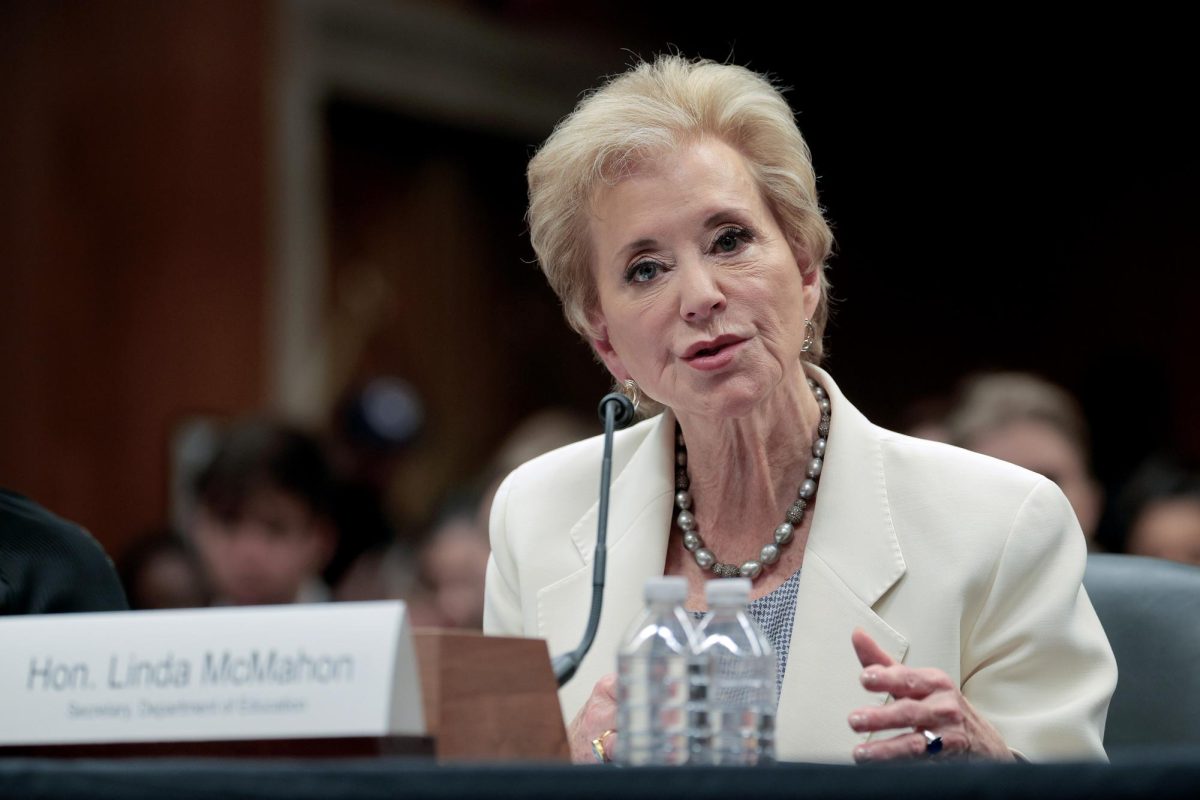
In March, President Donald Trump signed an executive order targeting the dismantling of the Department of Education, which would allow education authority to return to the states. Secretary of Education Linda McMahon was directed by Trump to take “all lawful steps to shut down the department… as quickly as possible.”
Although firing the staff members does not eliminate special education funding to the states, all 50 states will have different ideas about this new action as well as different levels of IDEA oversight.
While one state may decide to keep their special education staff, another may follow in Trump’s footsteps and fire their staff. This means that children with disabilities will have to learn the same way that children without do. They will not get specialized support and will not be able to work on more personalized aspects of their education, such as speech.
“I think that argument that people who don’t think that there should be a big federal role in education would say is that we can trust the states,” Washington Post’s education news writer Laura Meckler said. “They’re going to do a fine job. They care about kids just as much as bureaucrats in Washington do. But, for many years now, we have had the safeguard of a federal oversight.”
School districts found comfort in the fact that they had the Department of Education’s special education programs to fall back on. Whether they were concerned about funding or just a general question, they could look to the department and OSERS for support. However, without OSERS, they lack this support.
One possible solution to this could be to have each state organize a vote for its school districts so that parents, families and children with disabilities can have a say in this decision. It is very vital that the states include them in such decisions so that they get the opportunity to make decisions that are in the best interest of those who rely on special education programs.
The Department of Education has been charged with supporting special education for over 40 years and it does not make sense to change that now. It is extremely unfair for some disabled children not to receive the same help and education as other children with the same disability. A disability does not make a child any less worthy of getting an adequate education. Every student, with or without a disability, deserves to be educated effectively.












Nancy Ducato • Dec 5, 2025 at 10:11 pm
This was a great article, Stella. You are such a smart young woman. I know you will succeed in whatever you do! 🙂