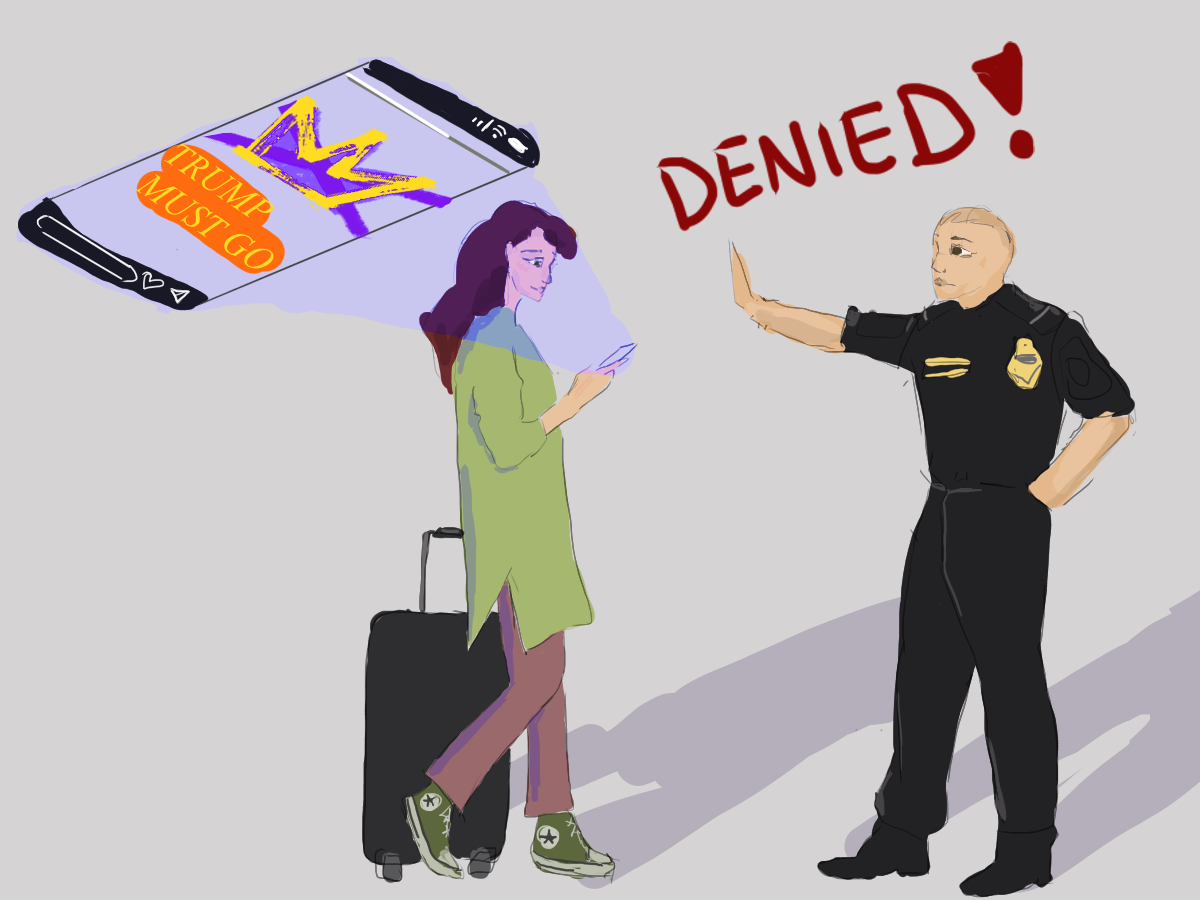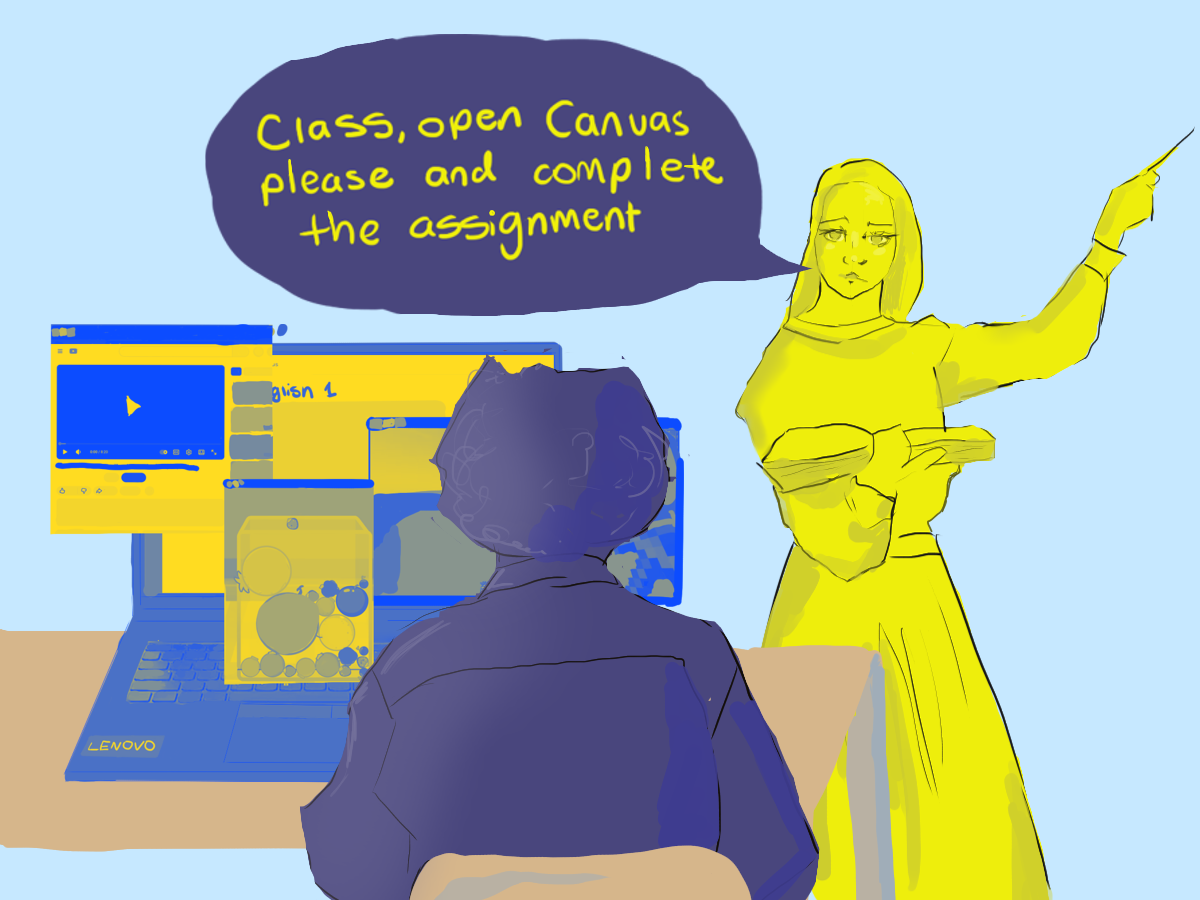


Commissioner of the Florida Department of Education (FLDOE) Kamoutsas Anastasios issued a statement on Sept. 11 regarding the assassination of conservative media personality Charlie Kirk. The statement declared that teachers are prohibited from posting any political opinions via social media.
The warning claims to align with the policies of Florida Statute 1012.795, which permits the suspension and firing of school employees, as well as the termination of an educator’s license, if they are found guilty of affecting the welfare of students through speech-related personal misconduct.
Reminding educators of the Florida Legislature’s power to discipline them under the probable cause of personal misconduct, the letter emphasizes that school staff who criticize Kirk or partake in discussions surrounding his assassination will be reprimanded.
“An educator’s personal views that are made public may undermine the trust of the students and families that they serve,” Anastasios said.
Kirk’s death has become a polarizing point of contention across the country, dividing the nation. Republican politicians, influencers and voters alike not only condemned political violence following his assassination, but voiced the sentiment that Kirk and his conservative media platform Turning Point USA (TPUSA) were bastions of free speech, open discussion and patriotism.
Meanwhile, Democratic politicians and supporters, while not agreeing with Kirk’s views, sent their condolences and highlighted the importance of free speech in America.
Many political officials and supporters of Kirk online compared him to other prominent leaders and activists assassinated in American history, such as Martin Luther King Jr. and President John F. Kennedy. Texas Congressman Tory E. Nehls even said in a hearing held by the House Judiciary Committee on Sept. 17 that if Kirk had, “lived in the Biblical times, he’d have been the 13th disciple.”
Seeing as Kirk’s death has sparked a larger conversation about the importance of free speech, Anastasios’ statement warning of censorship is alarming. The letter clashes not only with educators’ First Amendment rights when speaking as private citizens, but also with the glorified image of Kirk being bolstered by American media and Florida’s government. Florida Gov. Ron DeSantis even labeled the activist a “warrior for liberty.”
This blurred, indistinct line between what is considered acceptable and non-acceptable forms of free speech creates an environment in which who is given consequence may be skewed to align with specific agendas and biases, raising further questions considering TPUSA’s known right-wing platform.
The letter itself aligns with national movements toward censorship in the aftermath of Kirk’s assassination. Spurred on not only by school boards and private companies but also by the federal government, employees across the country have been penalized and terminated due to posts and comments seen as anti-Kirk.
A Nov. 2025 Reuters investigation found that over 600 Americans were fired from their jobs over adverse remarks made about the assassination, likely an undercount as many terminations were not disclosed.
The effects of this censorship also reached the entertainment industry; on Sept. 17, late night host Jimmy Kimmel was suspended off-air by ABC over negative comments levied against the Trump Administration’s response to Kirk’s death on Jimmy Kimmel Live!
“They are looking to affect teachers’ livelihoods simply because they express an opinion that they don’t adhere to,” attorney Dedrick Straghn said.
A deep dive into Kirk’s politics raises concerns about the message the FLDOE is sending to educators by delivering the letter.
Beyond baseline conservative talking points, Kirk often supported and defended arguments that can only be considered ethically and morally questionable. This includes racist arguments like the disproven 13/52 statistic — a debunked statistic relating to American crime demographics frequently used by hate groups to demonize Black Americans — as well as the use of biblical scripture to condemn homosexuality.
In an episode of The Charlie Kirk Show, posted on March 1, 2024, when discussing minorities and immigration, Kirk defined his stance by citing the Great Replacement Theory, describing it as, “a strategy to replace white rural America with something different” and “well underway every single day in our southern border.” The Great Replacement Theory has ties to white nationalist and neo-Nazi ideologies, and it warns that Aryans (Caucasians) will be replaced in western countries by the influx of immigrants and other minorities entering the nation.
The prominence the theory gained has sparked numerous acts of bigotry and violence, including the white supremacist-led Charlottesville “Unite the Right” rally in 2017, in which numerous neo-Nazi and white nationalist groups marched the streets of Charlottesville chanting “Jews will not replace us,” and “You will not replace us.” The rally resulted in multiple injuries and one death.
By no means should political violence and assassination be glorified nor normalized in American society. However, when observing the rhetoric Kirk pushed onto millions of Americans who followed TPUSA and watched the Charlie Kirk Show, one should be allowed to criticize and question Kirk’s character without the fear of retaliation and termination from their places of work. Is an environment free of censorship not what Kirk would have wanted?
“You should be allowed to say outrageous things,” Kirk said. “There’s ugly speech. There’s gross speech. There’s evil speech. And all of it’s protected by the First Amendment.”
Before Florida teachers are educators they are citizens, and as citizens they are promised freedom of expression. If statements are not associated with the school, students, or their duties as educators, individuals should be allowed to use their freedom of speech as they please, even if it does not align with the views of the Florida legislature.
There is no clear public documentation of the FLDOE explicitly addressing an educator’s social media post celebrating or criticizing the harm of another political figure with the same statewide format. Rule 6A10.081, cited in the letter as preventing such posts, is an inaccurate misrepresentation of the rule, stretching it into ambiguity to fit the narrative of the FLDOE and giving rationale to their enforcement of censorship.
The letter is intentionally vague, leaving room for interpretation. The ambiguity allows for selective enforcement and the targeting of those who do not align with the Florida legislature’s views.
The broadness, the statement’s opening focus being Charlie Kirk — a well-known conservative activist — along with the strong, morally loaded language including the use of words like “despicable” and “vile,” send a politically charged, opinionated message, directly going against the notion that partisan bias is unacceptable from employees under the FLDOE.
If those who truly care about Kirk and his legacy want to preserve liberty, it is imperative that we continue to allow open environments where honest discussion and scrutiny is not punished. Due to the life Kirk lived before his passing, his assassination has opened up numerous points of discourse and debate that should not be silenced.
Conversations and opinions about matters like this bring everyone involved to a closer understanding of other perspectives, a skill crucial in a time like now, where a nation has been socially fractured and divided due to recent political developments.
When observing Florida’s ongoing crusade against the First Amendment, one must ask two questions. First, should death absolve anyone from criticism? And second, why does it seem that free speech in America is reserved for Charlie Kirk alone?