

A free and independent press is a necessary component of democracy; it allows the people to ensure the government serves them and not the other way around. This is why the restrictions being placed on journalists of the Pentagon Press Association by Defense Secretary Pete Hegseth are alarming and actively undermine Americans’ First Amendment rights.
The initial policy change was announced on Sept. 20 and stipulated that journalists could not publish any information not approved by government officials, even if unclassified. Reporters had 10 days to sign a contract affirming this; not signing it meant risking the cancellation of their Pentagon press credentials.
The initial policy was then revised by the Pentagon on Oct. 6 and the deadline for journalists to comply was set for Oct. 14. This revision states that prior approval is not required for journalists to report on the Department of Defense, but rather suggests that “soliciting” information from Pentagon officials would not be protected activity under the First Amendment.
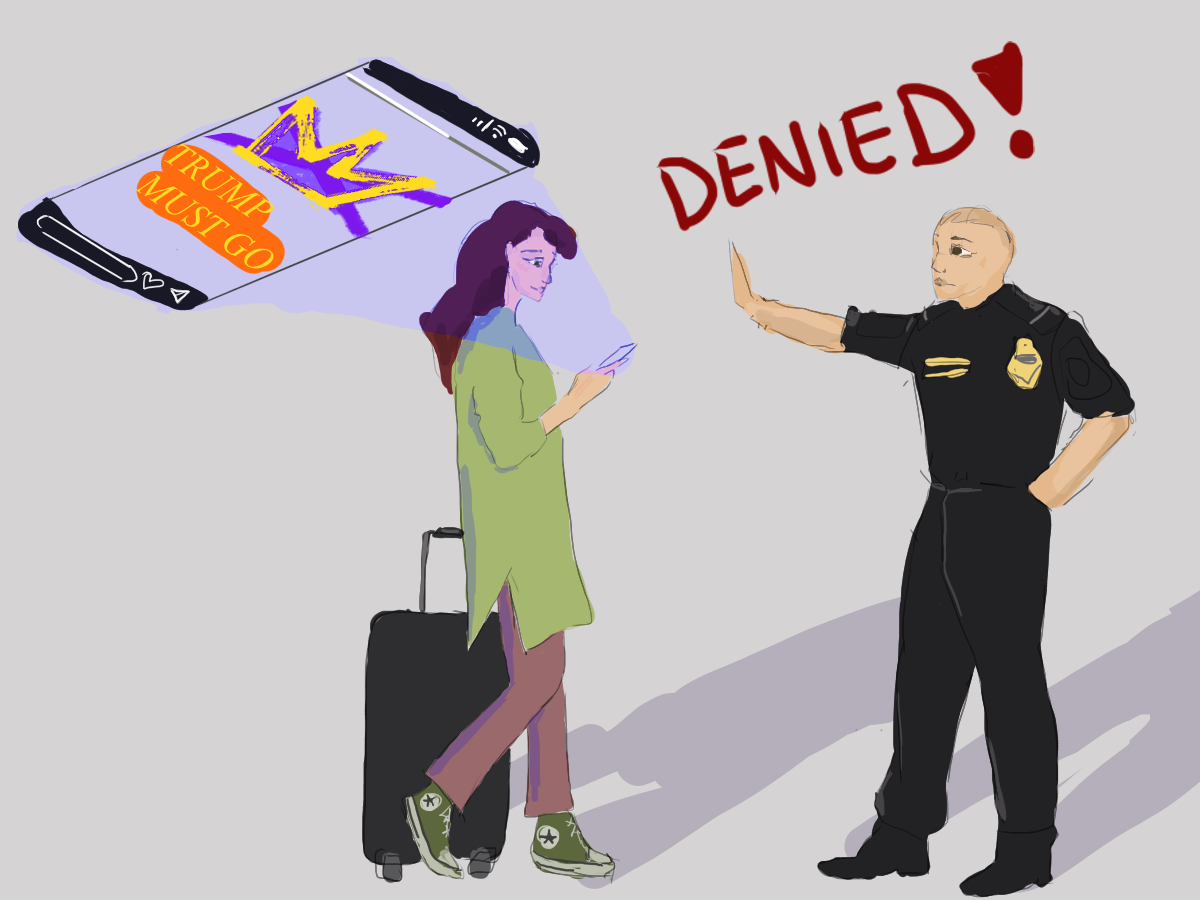
Journalists who refuse to sign this policy are consequently still at risk of losing their press credentials, as well as at risk of being considered “security risks.”
To restrict reporters from “soliciting” information, though, is to restrict them from keeping the nation apprised of important national security issues. If people are unaware of such issues, they have no way of ensuring the government’s actions reflect their will, which is vital in a democracy. Soliciting information is not something journalists do, it is what journalists do.
Hegseth’s new policy makes it so that reporters can seemingly publish no more than a press release or official statement without violating it. The implications of this are vast, with history consistently illustrating the Pentagon press corps’ valuable role in keeping Americans informed — especially regarding issues the government has not been forthright about.
In 2021, for instance, reporters covering the Biden administration’s withdrawal from Afghanistan unveiled the lies the government had relayed to the public. Official statements claimed that the pullout was smooth, but journalists repudiated this by reporting on a drone strike that killed 10 civilians, not 10 ISIS militants as the government had initially claimed.
Instances such as this one depict the ways in which the press has offered people awareness and truth at times in which the government has offered ignorance and deceit — the ways in which the press has invaluably contributed to democracy.
The new restrictions are especially ironic given that the most significant leak to come out of the current administration occurred at the hands of government officials themselves. This occurred when Jeffrey Goldberg, editor of the Atlantic, was accidentally added by government officials to a group chat in which they were discussing military operations in Yemen.
Moreover, to believe in a free press is not partisan, only democratic. Both Democrats and Republicans require a free press if they are to hold the government accountable and advocate for their beliefs.
It is because of this universal belief in a free press that reporters from both liberal and conservative news organizations turned in their government-issued press badges and walked out of the Pentagon on Oct. 15 in a display of commendable integrity. Rather than agree to the new policy, they collectively decided to turn in their passes.
According to an internal government document first obtained by the Washington Post, only 15 out of hundreds of credentialed reporters signed the new press pledge.
Some of the organizations that refused to sign the pledge include Fox News, Newsmax, CNN, NBC, The New York Times, Associated Press, CBS News, MSNBC, The Washington Post, PBS NewsHour, The Guardian, The Economist and ABC News, among many others. Hegseth was even a former employee of Fox News before being appointed defense secretary, yet the organization admirably refused to sign his pledge in favor of a free press.
Only three U.S. outlets — One America News, The Federalist and Epoch Times — and a small number of independent reporters signed the pledge. Andrew Thornebrooke, one of the Epoch Times’ national security reporters, even resigned in protest.
The cross-party agreement on this decision embodies the fundamental role of a free and adversarial press in democracy, something that has time and time again been affirmed by the Supreme Court.
“The fact that, for approximately one hundred and fifty years, there has been almost an entire absence of attempts to impose previous restraints upon publications relating to the malfeasance of public officers is significant of the deep-seated conviction that such restraints would violate constitutional right,” Chief Justice Charles Hughes said in the 1931 majority opinion of the Near v. Minnesota case.
In 1971, the court ruled that The New York Times and Washington Post had the constitutional right to publish classified documents pertaining to the government’s deception of the public during the Vietnam War. Alongside Near v. Minnesota, this landmark ruling set a high bar for future government attempts at preemptively censoring journalists under the guise of prior restraint. What these journalists exposed came to be known as the Pentagon Papers.
Still, although the 1971 ruling was a major win for the freedom of the press, it did not protect journalists nor their sources from prosecution after the fact. In the decades following the ruling, journalists have been subject to prosecution as a result of this vulnerability, including at the hands of the Obama administration.
Former President Barack Obama prosecuted many government officials under the Espionage Act of 1917 for leaking classified information. After 9/11, the government often invoked “national security” against those reporting on the Iraq invasion.
The new Pentagon policy is eerily reminiscent of these attempts at controlling information. It seems to be another means of preemptive government censorship and of invoking “national security” against reporters. The latter is seen in the Pentagon’s decision to deem journalists “security risks.” This designation criminalizes the very individuals who are holding the government accountable to the people.
The government is currently engaging in a series of bombings in the Caribbean, with the Pentagon’s restrictions likely already posing difficulties for the journalists reporting critically on these events.
Fortunately, while the government undermines the First Amendment, journalists remain committed to protecting it. If journalists of both parties continue to display the integrity they did on Oct. 15, and Americans support their efforts to maintain a free and independent press, the government can and will be held accountable.