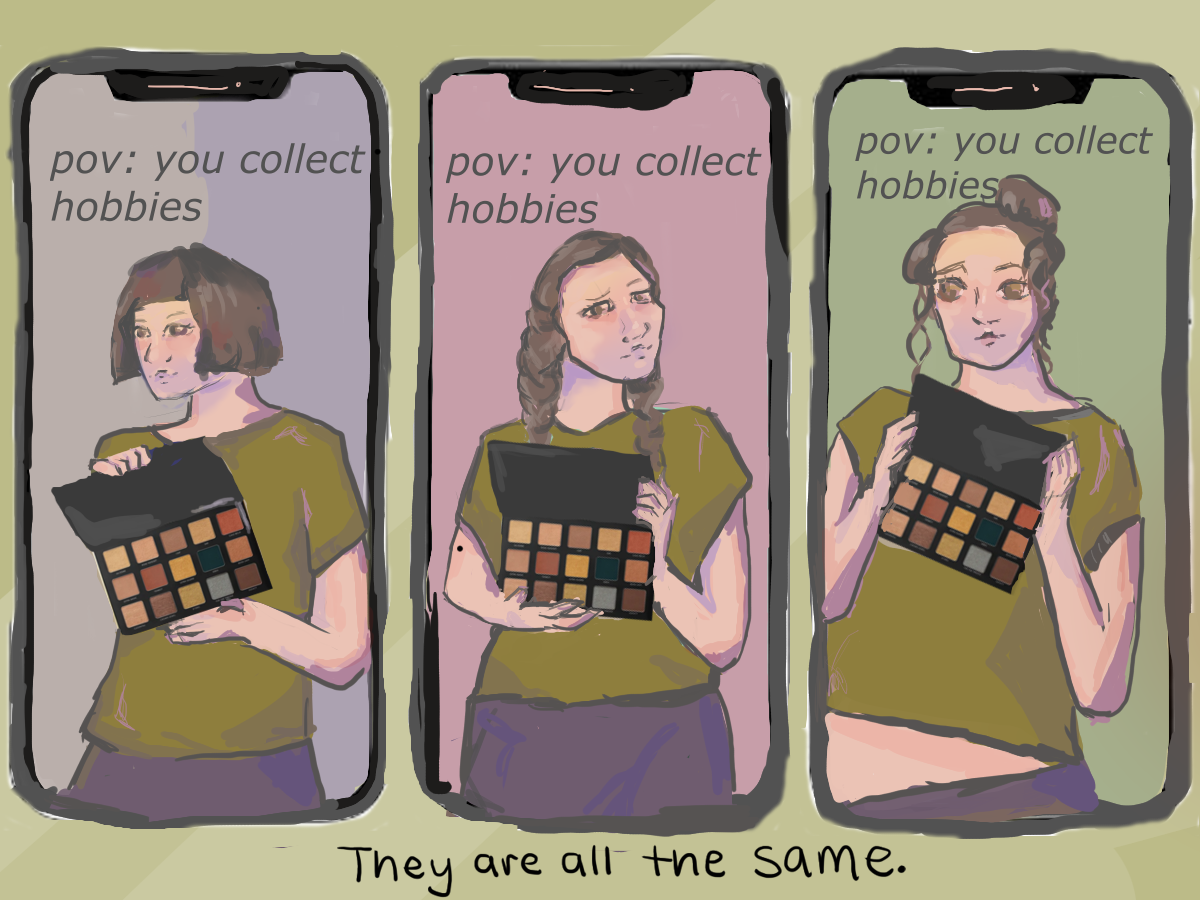

Social media platforms used to thrive on gained popularity by creating unique content and sharing creative ideas. The people who pushed boundaries were celebrated for being exceptional. But as social media use increased, the era of creativity faded. Nowadays, repetition rather than originality dominates feeds.
A user’s primary goal on social media is usually to go viral and gain followers. In the early days of social media, only the most unique videos would receive the attention many desired. For example, on Vine — a social media site that, before being discontinued in 2017, was known for six-second looping videos — the most popular videos and creators gained fame because of their original content.
However, on current social media platforms, such as TikTok, going viral now depends on predictability. Algorithms push out videos that use recycled audios and copy-paste captions, rewarding conformity, not creativity. In order to stay relevant, users have to follow this system of conformity.
Vine’s algorithm was primarily based on following, whereas TikTok’s “For You Page” curates videos based on users’ interactions with certain clips.
Videos in which one person attempts to sing a song, then plays it backward to another person, who has to attempt to sing the song correctly using the reversed track is just one example of a recently overdone trend. Although entertaining at first, this trend became boring when more and more people did it simply because it received views.
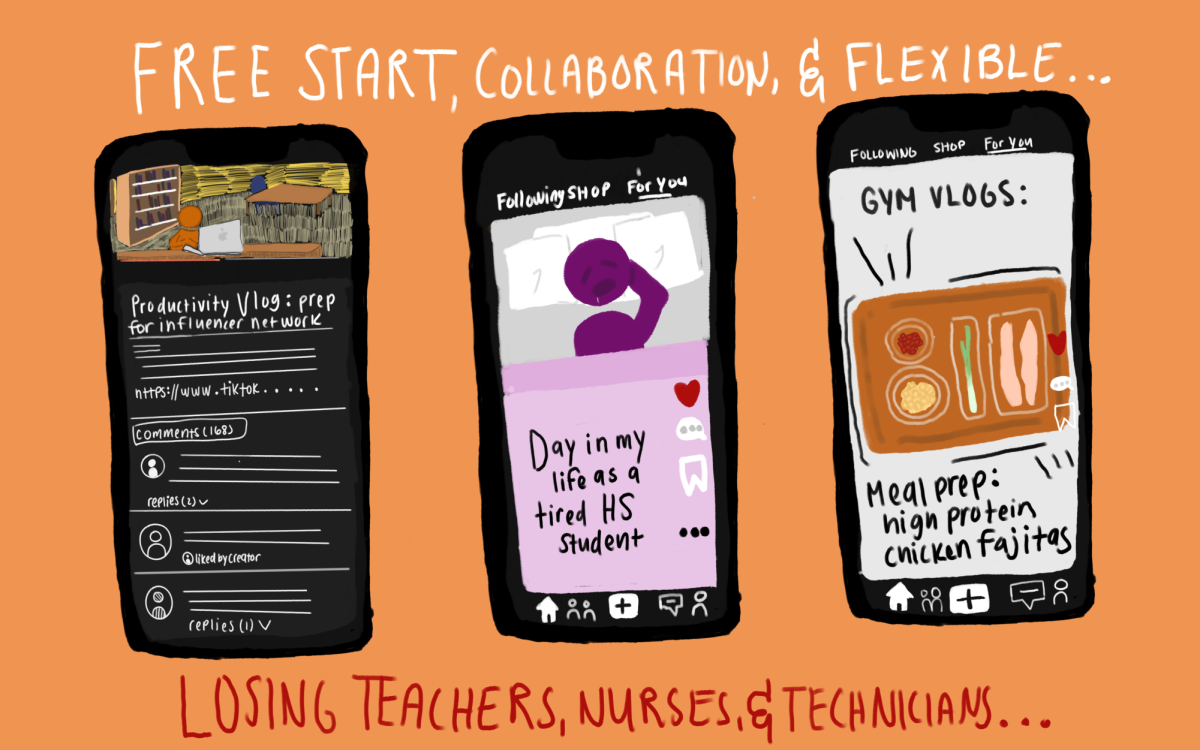
Furthermore, in recent years, commercialization has gained traction, being both beneficial to brands and influencers. Current influencers have brand deals with a wide variety of companies. These influencers also typically post the same types of videos as each other, such as “get ready with me” and “a day in my life” content. Clearly, brand deals require creators to have a specific style of content. Without this style, influencers are unlikely to gain companies’ attention, decreasing their chance of fame.
Content creators are also forced to stick to their niches, unable to branch out from their regular content without risking decreased engagement. This unfairly pressures creators to post what the algorithm wants instead of what they want.
Even content that seems to be original is stolen from smaller, niche creators. Memes and jokes that originated from smaller creators frequently become popular because a larger creator copies and reposts it without adding anything of their own.
For example, TikTok creator @ryanmmichaels has been called out online by other creators for stealing their content without giving them any credit.
To fix this issue, TikTok now flags content as “low quality” or “unoriginal,” requiring creators with these violations to delete their plagiarized content. However, this filter does not accurately flag all videos and may even wrongfully flag original content. Evidently, TikTok needs to spend more time adjusting this filter.
Of course, while rare, there are some creators that do post original content. Although they may not get the fame they desire, they are still often appreciated by niche audiences. For example, accounts that post edits are often appreciated, even if most do not go viral.
Still, more content creators need to take risks and upload the content they are most comfortable with instead of simply copying others and following trends. Users also need to uplift creators who post original content and engage with videos featuring creative, innovative ideas and thoughts. Additionally, social media companies should modify their algorithms to promote original videos with low views instead of unoriginal videos with overdone trends. This will allow social media platforms to return to what they once were: platforms for sharing and engaging with unique ideas.
This story was originally published in the January 2026 Eagle Eye print edition.