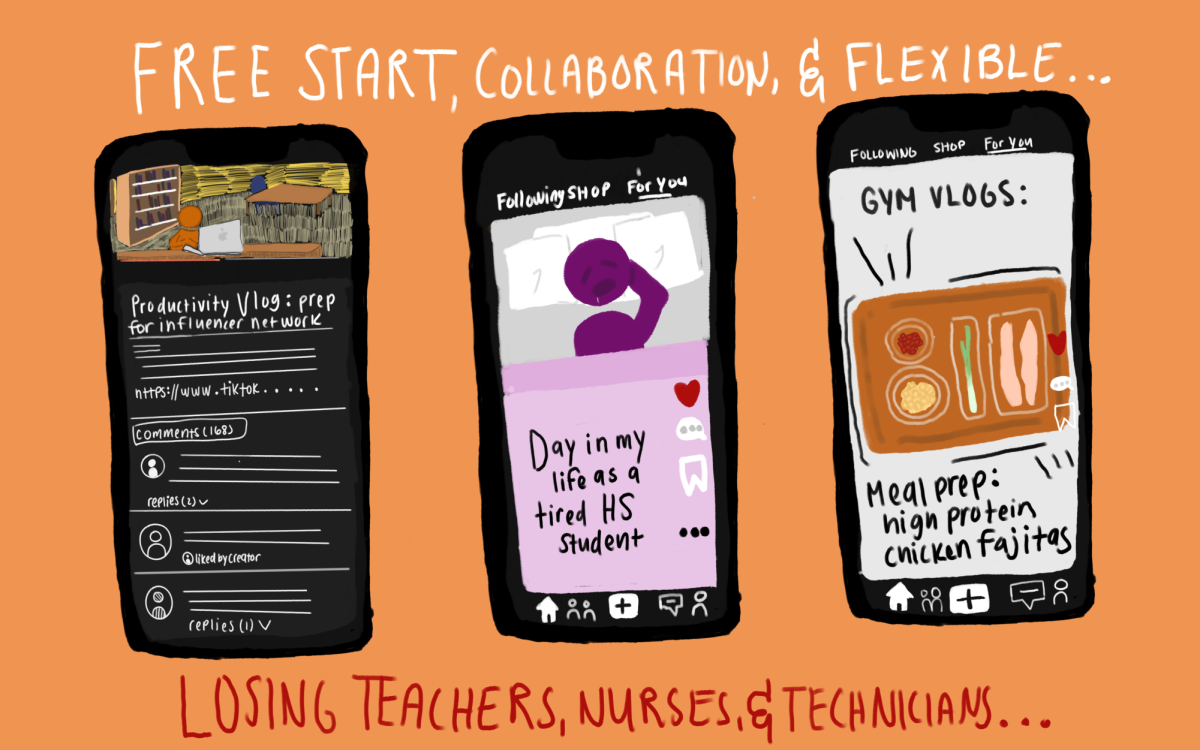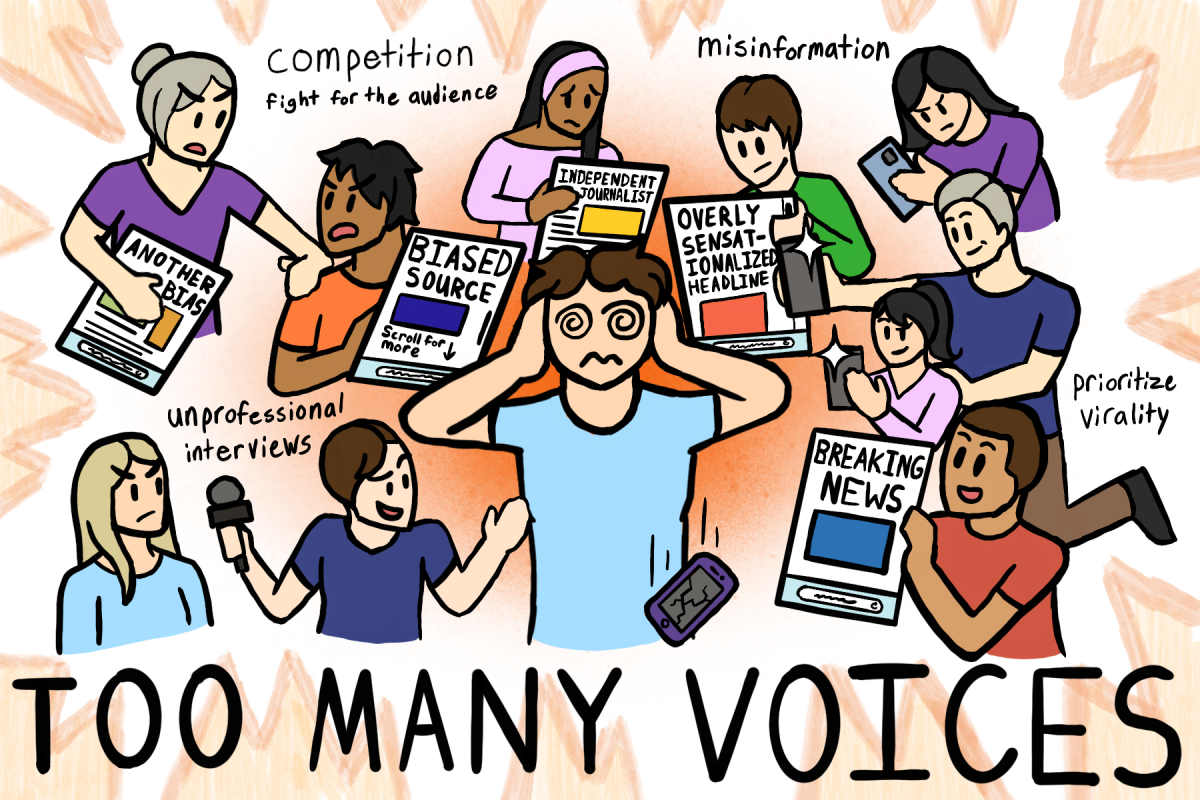


“Brain rot” can be defined as the deterioration of brain function due to the consumption of low-value videos on the internet, according to the National Library of Medicine. These videos — often short, repetitive and artificially-generated — are designed to be highly addictive, as they require minimal effort to consume. In recent years, these videos have gained popularity, causing considerable damage to the current youth and posing similar implications for future generations.
According to clinical neuropsychologist Fadi Tayim, it is common for the average person to spend between five to eight hours per day consuming brain rot.
This overwhelming amount of screen time indicates that a significant portion of the global population is regularly exposed to low-quality content. As brain rot becomes normalized, it contributes to cognitive decline, a loss of creativity and reduced empathy, forever affecting future generations.
One concerning consequence of brain rot is a deterioration in cognitive abilities. Cognitive intelligence refers to a person’s ability to learn, remember and solve problems. According to Inspira Health, brain rot results in a reduced attention span, mental fatigue, decreased memory retention and increased stress.
Specifically, brain rot’s short, repetitive nature makes it difficult for consumers to focus on longer, complex tasks, such as school work. According to the Harvard Gazette, literacy rates have declined over time; brain rot plays a significant part in this by overloading the brain with information, leaving people drained and mentally fatigued. Constantly shifting focus between mindless content affects one’s ability to retain and recall primary information.
Over time, brain rot consumption weakens critical thinking and reduces the brain’s capacity to analyze material, negatively affecting everyday decision-making.
Furthermore, brain rot suppresses creativity by eliminating the mental space required for the creation of innovative ideas.
“What we’re seeing now is that there’s a thinning of the cortex, which is the outer layer of the brain,” Tayim said. “This results in cognitive delays and attention and concentration deficits.”
Creativity does not come from constant stimulation; rather, it develops during moments of boredom and curiosity.
Historically, innovations in art, science, math and literature have been driven by those who opened their minds to curiosity, such as Albert Einstein and Leonardo da Vinci. However, in today’s world, boredom is consistently avoided by consuming brain rot. This prevents the brain from forming new connections, as it is constantly fed meaningless content rather than being encouraged to generate its own meaningful content.
As a result, originality is replaced with imitation. Online trends encourage users to replicate the same jokes and opinions, rewarding conformity. Brain rot dominates online algorithms, exposing people to the same, repetitive content. This loss of creativity diminishes expression and originality.
Brain rot also contributes to a decline in empathy and meaningful human connection. According to the American Heart Association, brain rot causes emotional desensitization. This is because people are exposed to overstimulating and oftentimes negative content repeatedly, allowing for its normalization. This means that when negative situations occur, people are less inclined to feel sympathy or empathy. Instead, they react the same way they do when viewing brain rot, potentially spurring higher rates of negative situations as people do not care enough about them to take action or intervene.
For example, people frequently exposed to graphic violent content, such as gore, will eventually stop seeing it as morbid and begin seeing it as normal. Then, if a situation involving gore were to occur in, they would not react as much as someone who happens to be witnessing it for the first time.
Moreover, brain rot reduces face-to-face interactions and human connection as people spend more time online than offline, according to the National Library of Medicine. This results in a decreased amount of emotional input — the facial expressions and body language that people have when talking to others in person — further contributing to the current empathy crisis. These artificial interactions lack complexity and meaningful connection, yet they are being used as substitutes for actual interaction.
While brain rot has extensively affected people’s minds, though, the effects are reversible.
Creating new habits can inhibit the consumption of brain rot. This includes limiting screen time and social media use, not using phones while in bed and taking regular breaks in between consumption to stimulate mental rest. Other solutions include engaging in physical activities, finding new hobbies unrelated to brain rot, improving one’s diet and more.
Government laws that limit screen time or regulate internet use can also reverse the effects of brain rot. For example, Chinese lawmakers have proposed a 40-60 minute limit on the screen time of those under the age of 18. The American government can also take this approach to protect future generations.
As the consumption of brain rot becomes more normalized, it continues to threaten cognitive health, creative thought and human empathy. If it is ignored, it will negatively shape future generations, making it imperative that action is taken to ensure the skills that define intelligence, individuality and interaction are preserved.