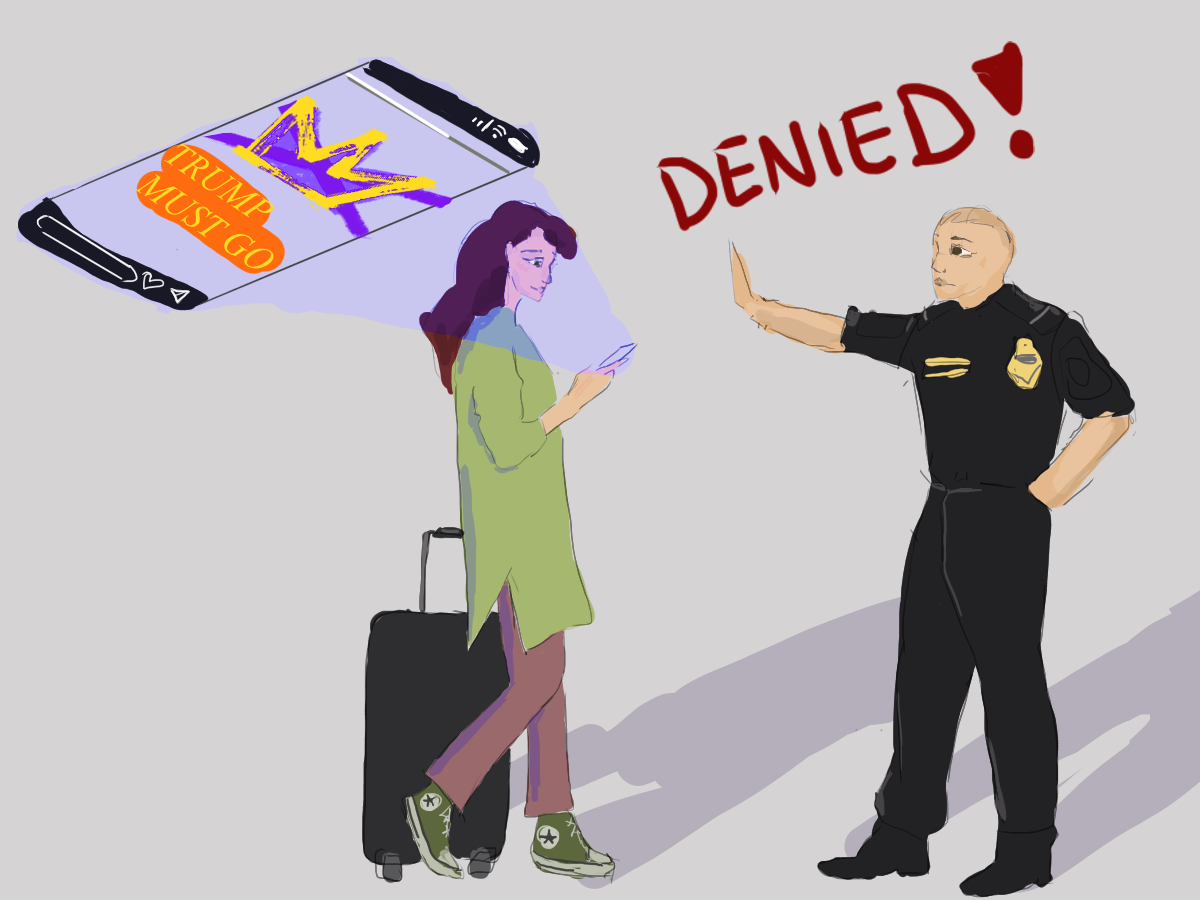


Rep. Peggy Gossett-Seidman (R-FL) filed Florida House Bill 49 on Sept. 26, which would strictly criminalize common political activities on school campuses, including posting signs, distributing flyers and campaigning in public schools and colleges. This is a direct attack on students’ freedom of speech.
Republican lawmakers across the U.S. have introduced various funding cuts to colleges where students express political opinions diverging from the current administration. The federal government cut college funds over students expressing pro-Palestinian sentiments on campus, affecting Columbia University, UCLA, Harvard, Cornell, Northwestern and several more colleges. Funding for research initiatives at the University of California was cut over antisemitism claims due to student protests pushing for college divestment from Israel.
“When I did a deep dive, I found that this problem is occurring on many campuses throughout the state, and it puts schools in peril of losing funding,” Gossett-Seidman said to Florida Politics.
Historically, students have always been on the forefront of political organizing. Whether it was the Vietnam War, divestment from South America or gun violence, students have always pushed for change. Today is no exception, with students continuously fighting for divestment from Israel on both college and high school campuses.
It comes as no surprise that Florida would follow in the footsteps of the Trump administration, which has targeted pro-Palestinian campus activists using allegations of anti-Semitism and terrorism. Republican laws that create restrictions on speech are typically passed under the virtue of ‘fairness’ or ‘security.’ It is also unsurprising that Gossett-Seidman — who introduced House Resolution 9-C in 2023, which expressed Florida’s support for Israel and supported “Isreal’s right to defend itself” in the midst of a genocide — is decidedly against the campus activism that does not align with her and the Republican party’s interests.
According to the ACLU, students have the right to engage in protected speech. This means they can wear expressive clothing, hand out flyers, collect signatures for petitions, campaign to effect change and come together for protests, so long as they are in a public area and nondisruptive. HB 49 is another instance of government intervention and censorship that violates these basic constitutional protections.
Especially in colleges, it is worrying what speech will be deemed acceptable versus ‘too political.’ This law gives a lot of leeway that lets those in power decide what is permissible and non-premissible speech on campus.
Under HB 49, violating any of these restrictions would be a second-degree misdemeanor, meaning up to 60 days in jail and a fine of up to $500. Each violation would count as a separate offense; a criminal offense for hanging up posters is extreme for what would usually constitute a small fine.
Students continue to be arrested, suspended or expelled for exercising their First Amendment rights — this is only a continuation of the severe penalties placed on student protestors to silence dissent.
Universities and colleges have long been sites of protest, particularly anti-war protests. It is important that these spaces continue to be places for free speech and expression for both students and staff.
This law, in addition to student restrictions, restricts certain employees from using e-mail, offices or time during working hours for political advocacy. For teachers involved in union work or similar protest work as students, they are at risk of losing their livelihoods. Several professors are facing investigations, criminal charges and suspensions over their pro-Palestinian speech.
Gossett-Seidman said an amendment will be filed to adapt the law to only apply to higher education, but expand to private institutions as well. If passed, HB 49 would go into effect on July 1, 2026.